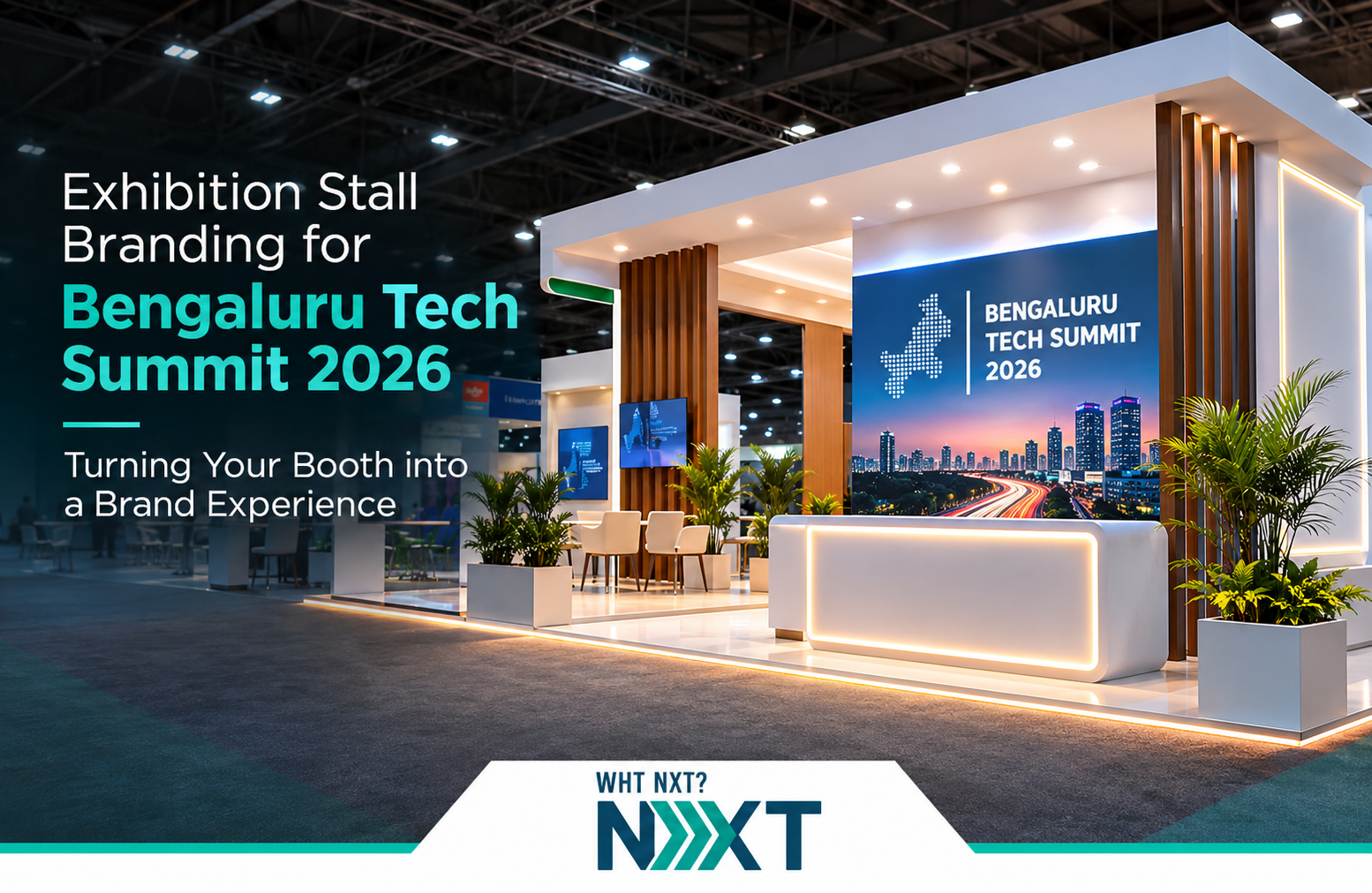
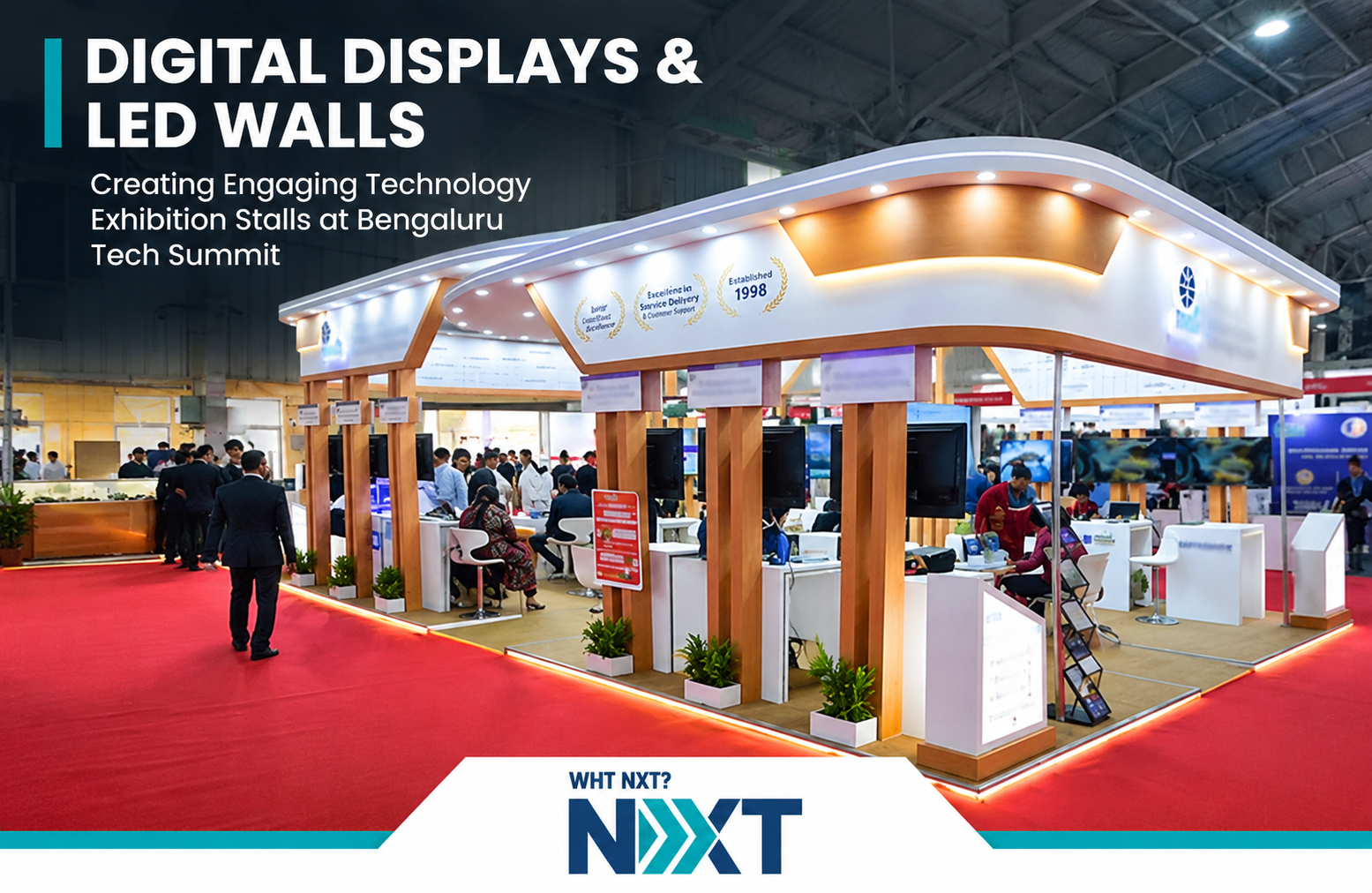
Technology exhibitions have moved beyond just showcases of products, services and business solutions. They are immersive environments where brands fight for attention, communicate innovation and forge meaningful connections with visitors. At an event like the Bengaluru Tech Summit where technology companies, startups, investors and industry leaders congregate, it is important to make a memorable exhibition presence. Digital displays and LED walls have become an effective instrument for the design of modern exhibition stalls, helping businesses to transform ordinary exhibition spaces into engaging brand experiences. From large format video walls, interactive displays or engaging product demos, these technologies enable exhibitors to communicate complex messages through compelling visuals.
The Increasing Role of Digital Displays in Tech Exhibitions
At a technology-driven exhibition, visitors expect more than traditional banners, printed graphics and static product displays. “They want to know what a company does, how its solutions work, and why its innovations matter. And digital displays are a good way to get this information across without bombarding visitors with lengthy text or complicated explanations.
Digital screens offer exhibitors the ability to change content on the fly, to show several products and to present information in various formats during the course of the show, unlike traditional printed graphics. A technology company may utilize the exhibition space to showcase product demonstrations, corporate presentations, application videos, customer testimonials, and real-time business information.
For exhibitors at Bengaluru Tech Summit, digital displays can also help to create a corporate identity that is modern and innovation-driven. A good digital presentation is a sign of professionalism and enhances the visual attractiveness and user-friendliness of the exhibition stall.
LED Walls: Making a Strong Visual Statement on the Exhibition Floor
LED walls are one of the most effective visual elements used in modern exhibition stall design. They are particularly well suited for technology exhibitions, where visual communication plays an important role. Their ability to deliver high resolution images, brightness and large display area are their key advantages.
A strategically placed LED wall can become the centerpiece of an exhibition stall and can attract visitors from different directions. These displays allow companies to showcase animated brand images, product demos, industry applications, technology explainers and promo videos.
The effectiveness of an LED wall is not just a matter of size. Location, viewing distance, resolution, brightness and content quality all have to work together. A display that is too large for a space not well planned can overwhelm the stall without adding to the visitor experience. Similarly, bad visuals can spoil the general impression of a professionally designed exhibition environment.
LED walls should therefore be integrated into the overall stall architecture rather than treated as separate decorative installations. The display should complement the logo, structural design, lighting and movement of visitors within the exhibition space.
Interactive Digital Screens to Increase Visitor Engagement
LED walls are great at grabbing attention, but interactive digital screens are better at converting that attention into real engagement. Visitors can explore information at their own pace using touchscreen kiosks, digital product catalogs, interactive presentations and self-guided demonstrations.
For example, a software company can use an interactive touchscreen to showcase its platform, letting visitors explore different features and applications. For example, an engineering technology company can demonstrate 3D models of the product, technical specifications and application videos. Similarly, an early-stage company can use interactive displays to demonstrate its business model, product capabilities, and potential industry applications.
These interactive elements make for a more participatory exhibition experience. Visitors are not just sitting there and watching a presentation, they are actively involved in discovering what the company has to offer.
But there should be a real purpose for interactive technology. Too many screens, complicated interfaces or unnecessary animations can distract visitors. The best exhibition experiences rely on technology to help simplify communication and make important information easier to understand.
Role of Digital Displays in Architecture of Exhibition Stall
To have a successful technology exhibition stall there needs to be a balance between visual appeal, functionality and brand communication. From the first design stage, digital displays should be incorporated into the physical structure of the stall.
LED walls can be incorporated into main backdrops, hanging structures, product display areas or special presentation areas. Smaller digital screens can be positioned close to product counters, consultation areas and interactive demonstration stations.
Surrounding architecture should also support and not compete with the display. Good structural lines, adequate light, organized branding elements and well-planned pathways for visitors help create a cohesive exhibition environment.
For larger exhibition spaces, there can be multiple digital display zones designed for different communication purposes. An LED wall in the center can introduce the company and its capabilities, with smaller screens for individual products or services. This creates an organized visitor journey, enabling people to progress from brand awareness to detailed product exploration.
Exhibition details for the Bengaluru Tech Summit will help exhibitors understand the context of the event and plan their participation accordingly. Also, it is important to check the Bengaluru tech summit 2026 venue information for planning the stall layout, the positioning of the displays, the structural requirements and the areas for presentation to the visitors.
Communicating Complex Technologies with Digital Content
One of the main challenges for technology exhibitors is how to explain complex products and solutions in the time available for interaction. Visitors might not have the technical knowledge or the patience to understand long explanations. Digital content makes this communication easier through animation, demonstrations, visual storytelling and short presentations.
For instance, an animation can be used by an artificial intelligence company to demonstrate how its platform processes information and helps to run business operations. Robotics manufacturers can use demonstration videos to show machine movements and industrial applications. Visual presentations can help a semiconductor company demonstrate its technology, manufacturing capabilities and product applications.
The short-form content works particularly well in an exhibition setting as visitors will often move between multiple stalls in a limited timeframe. Videos should get to the point quickly, have readable text, and have a consistent brand.
The content should also be optimized for the physical setting. Important information should be visible from an appropriate viewing distance. Animations and transitions should be smooth enough to maintain attention without becoming distracting.
Balance of Technology, Lighting and Visitor Movement
Digital displays can do a lot for an exhibition stall. But their effectiveness will depend on how well they fit in with other design elements. The experience is affected by lighting, structural design, acoustics and visitor movement.
LED walls generate their own illumination so the surrounding lighting has to be well thought out to avoid visual imbalance. Too much lighting in the vicinity of digital display screens can affect visibility and poorly lit areas for product demonstrations can reduce visitor interest.
Another important consideration is sound. Video demonstrations and presentations should not make unnecessary noise or disturb conversations at the neighboring stalls. Exhibitions can be kept comfortable by using directional speakers, audio levels and designated presentation areas.
The placement of screens should also take into account visitor flow. Displays shall be visible without blocking entry points, product counters, meeting spaces or circulation areas. Interactive stations should be big enough for visitors to comfortably interact without causing congestion.
A well designed stall means that the technology enhances the experience and does not make the exhibition space difficult to move around.
Choosing the Right Digital Display Technology
Choosing the right display technology is an important part of exhibition planning. Businesses have varied communication needs and the choice should be based on the size of the stall, the space available, the content requirements and the visitor experience you wish to generate.
Large LED video walls are great for brand storytelling, product launches and high-impact presentations. Indoor LED screens can give seamless visuals across larger surfaces, while LCD and commercial digital signage screens are great for product information, presentations and interactive demonstrations. Touchscreen kiosks are especially good for product exploration, lead capture and digital catalogs.
Exhibitors should also think about screen resolution, pixel pitch, viewing distance, connectivity and equipment reliability. Content compatibility and backup plans are both important, particularly if the display is being used for scheduled presentations or live demonstrations. By planning these technical requirements beforehand, we will be able to avoid operational problems during the exhibition.
Quantifying the Business Value of Digital Display Screens at Exhibitions
The success of digital displays shouldn't be evaluated only on how they look. Their real value is in their ability to enhance business communication, visitor engagement and lead generation.
Exhibitors can measure their success by monitoring how many visitors are interacting with touchscreen displays, completing digital forms, attending product demonstrations, and collecting leads via QR codes. These indicators give useful insight into which content and display formats attract the most interest.
Sales reps can also find it easier to talk to prospective buyers with digital screens. Teams can communicate solutions more effectively by using product videos, technical presentations and interactive demos instead of just using words.
Bengaluru Tech Summit 2026, to be held from 17 to 19 November at the Bangalore International Exhibition Center (BIEC), will provide an opportunity to the exhibitors to showcase their innovations to a large technology audience. With more than 1,800 exhibitors expected, a unique and well planned exhibition presence is especially important.
Conclusion: Designing Future Exhibition Experiences with WHTNXT
Technology exhibitions are being reshaped by digital displays and LED walls, changing the way companies showcase themselves. They enable complex solutions to be communicated, product capabilities to be demonstrated, brand recognition to be strengthened and more interactive visitor experiences to be created. But successful implementation is more than simply erecting big screens. It needs careful planning, creative content, technical coordination and integration with the overall exhibition stall design. As businesses gear up for Bengaluru Tech Summit 2026, investing in an engaging and professionally designed exhibition space could make a significant difference in the way their brands are perceived. WHTNXT combines exhibition design, stall fabrication and experience led execution to help businesses create impactful exhibition environments. WHTNXT is a trusted custom exhibition stand company that specializes in creating unique exhibition spaces that incorporate innovative design, functional layout, and effective brand communication. WHTNXT helps brands to transform their ideas into engaging physical experiences, ranging from LED walls and digital displays to full exhibition stands that attract visitors and make a lasting business impression.