In the high-stakes theater of a trade show, your exhibition stall is either a magnet or a wall.
Most exhibitors spend months obsessing over Pantone shades and the thickness of their brochures, only to realize on day one that people are actively avoiding their space. Here’s the hard truth: Visitors don’t avoid stalls randomly; they choose not to enter because your design is telling them to stay away.
If your stall feels like effort to enter, it’s already failed. In an environment where the average attention span is less than three seconds, you aren't just competing with your direct rivals—you’re competing with fatigue, hunger, and the siren call of the nearest coffee station.
To win, you need to stop designing for aesthetics and start designing for human behavior.
The Psychology of the "No-Entry" Zone
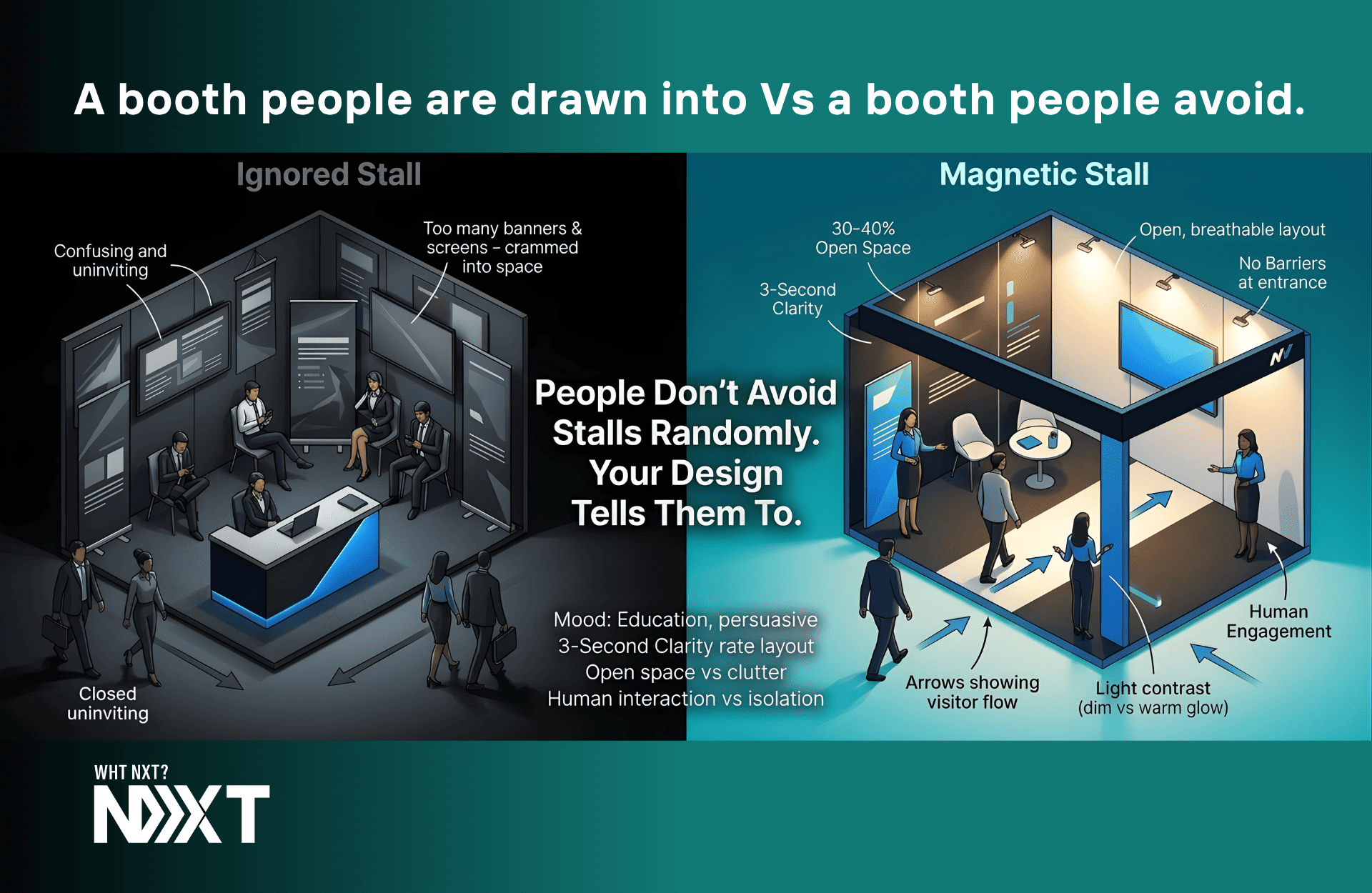
Most stalls are built like fortresses. They are visually cluttered, over-branded, and physically blocked by a massive reception desk that acts like a "Do Not Cross" line.
Insight: If a visitor has to stop and ask themselves, "Where do I start?" or "What do these people even do?"—they’ve already kept walking.
To get people to step off the carpeted aisle and onto your floor, you have to lower the perceived cost of entry. ---
4 Pillars of an Irresistible Entry
1. Radical Openness
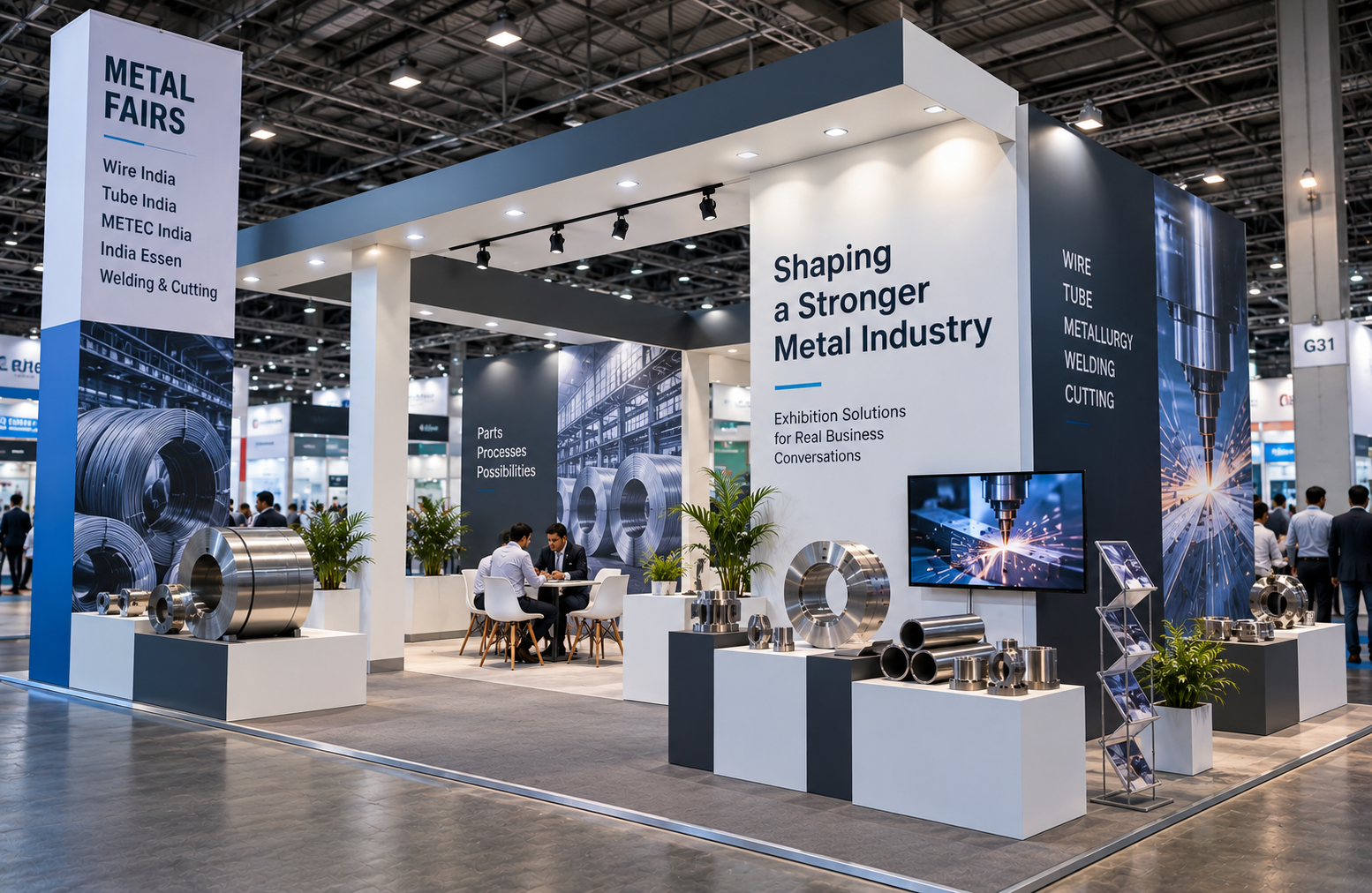
Your layout is your first handshake. A 4-side open island booth or a wide-open front is non-negotiable. Remove the barriers. If you place a counter at the very edge of your stall, you are effectively closing your borders.
- The Rule: Keep 30–40% of your floor space entirely clear. This "breathing room" signals that the space is safe to enter without being trapped.
2. The 3-Second Messaging Rule
Exhibition marketing strategy isn't about telling your whole life story. It’s about answering one question: “What’s in it for me?”
- Use high-level signage to state your value proposition, not your company history.
- Pro Tip: Your logo should be at the top, but your solution should be at eye level.
3. Visual Contrast and Lighting
Trade show floors are beige, gray, and fluorescent. To attract visitors to your booth, you need to break the visual monotony.
- Lighting is your secret weapon. Use warm, inviting lights for seating areas and sharp, bright spotlights for product displays.
- Contrast: If the hall is dark, go bright white. If the hall is bright, use bold brand colors like deep reds or navy to create a "destination" feel.
4. The Human Edge
Your staff is part of the architecture. Staff standing in a line at the entrance look like bouncers; staff sitting deep inside look disengaged.
- Positioning: Staff should be positioned at the "warm zones"—just inside the entrance, ready to make eye contact, but not blocking the physical path.
Common Mistakes That Repel Visitors
Avoid these "visitor-repellants" at all costs:
- The Reception Blockade: Placing a large desk at the front center is the #1 reason people don't enter. It creates a transactional barrier.
- The "Clutter Core": Too many products, too many TV screens, and too many roll-up banners. If everything is loud, nothing is heard.
- The "Dead Zone": Staff staring at their phones or eating in the booth. It’s the ultimate signal that the space is private, not public.
The Execution Shift: From Display to Experience
Stop thinking about your exhibition stall design as a "display." Start thinking of it as an Engagement Space. A display is passive; an engagement space is active. A high-end stall should have a defined pathway that guides a visitor from the "Aisle" (Curiosity) to the "Demo Zone" (Interaction) and finally to the "Lounge" (Conversion).
Pro Tip: Place your most "instagrammable" or high-tech attraction at the front-right corner. Statistically, people tend to veer right when entering a space. Use that behavior to your advantage.
Conclusion: Entry is the Only Metric That Matters
You can have the best product in the world and the most expensive double-decker structure in the hall, but if they don’t walk in, nothing else matters. Entry is the first conversion of the trade show. Every design choice you make—from the height of your mezzanine to the placement of your chairs—must serve the singular goal of making the transition from the aisle to your floor feel natural, easy, and inevitable.
Ready to stop being ignored? Designing a high-performance stall requires more than a 3D render; it requires a deep understanding of how people move and think.
Invest in a strategy that invites the world in, rather than just standing in the corner.

एक टिप्पणी छोड़ें
आपका ईमेल पता प्रकाशित नहीं किया जाएगा। आवश्यक फ़ील्ड * से चिह्नित हैं