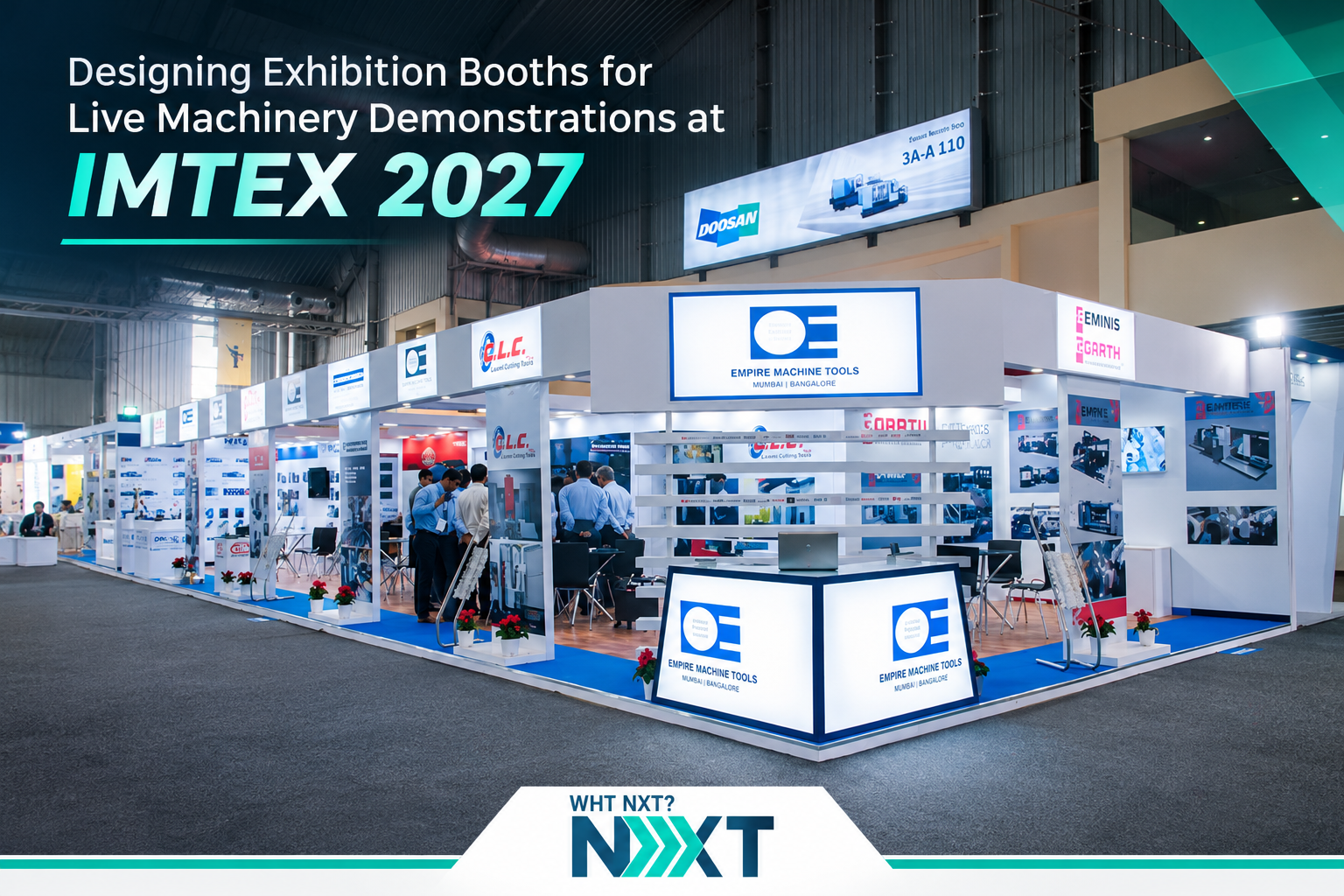
And with IMTEX 2027 just around the corner, manufacturers will be keen to design their booths in such a way that machinery can be demonstrated live. An exhibition space should successfully convey the technical expertise of the brand, whilst ensuring the machines are able to operate and visitors are able to interact with their capabilities as freely as possible.
The Importance of Live Machinery Demonstrations at Industrial Exhibitions
Industrial buyers place more importance on practical performance than promotional claims when making their buying decisions. Product brochures, digital presentations and technical specifications provide useful information, but they cannot fully communicate how a machine performs in operating conditions. Live demonstrations fill that gap, allowing visitors to see actual machine operation, to understand production capabilities and to evaluate equipment with more confidence.
These demonstrations provide opportunities for substantive conversations with potential customers for exhibitors. More than simply showing their products, brands can attract visitors by engaging them through hands-on experiences. A precision cutting machine, an automated manufacturing process or a high-speed machining demonstration can easily become the centerpiece of an exhibition booth.
Live demos help companies to differentiate themselves from the competition. In an exhibition environment where several manufacturers may be exhibiting similar technologies, demonstrating real operational capabilities can leave a more lasting impression and entice visitors to spend more time at the booth.
Planning Booth Layout Based on Machinery Operations
The first consideration in the design of an exhibition booth for live machinery demonstrations is the layout. The machinery requires space to operate and the booth needs space for the equipment and the activities around it. The placement of machines without due regard for movement, access and circulation of visitors can result in congestion and reduced effectiveness of displays.
A good layout will mean separate but connected areas for running machinery, watching what is going on, talking about the technical side and getting information about the products. The demonstration area should be large enough to permit operators to work with comfort and visitors a clear view of the equipment. Consultation rooms should be located relatively close by, without interfering with the operation of machines.
Large industrial machines also require dimensionally correct placement, loading requirements and accessibility. Designers must consider how the equipment will get into the exhibition hall, how it will be placed and if there is enough space for installation and maintenance.
A well laid out booth will ensure the machinery is the focus and that everything else supports the overall visitor experience.
Safety Integration in Exhibition Booth Design
Safety is one of the most important considerations in planning live demonstrations of machinery. Industrial equipment can include moving parts, cutting actions, electrical connections, heat, vibration and other operational hazards. If a booth is not safe for visitors or operators, then it is not a good booth, no matter how good-looking it is.
Designers need to consider suitable safety barriers, protective enclosures and clear visitor boundaries. “Machines should be located so that demonstrations can be viewed by spectators from designated viewing areas, and spectators should not be allowed in operational areas. Transparent protective panels can provide physical separation of visitors from machinery but allow visibility where required.
Electrical infrastructure, cable management and emergency access should also be part of the initial design and not last minute arrangements. Additional precautions may be required for equipment that generates noise, heat or dust depending on its operating requirements and exhibition regulations.
The exhibitor’s technical team, machine operators and exhibition organizers should be included in the safety planning. Their combined input helps ensure the booth design is appropriate for the actual operating conditions of the equipment.”
Planning Effective Viewing Areas for Visitors
A machine in action is of use only in so far as the visitor can see what is going on. The audience's enjoyment of the machine's capabilities can be affected by poor visibility, crowded viewing areas and equipment that is not properly positioned.
Exhibition stand designers need to consider sight lines from different locations within the stand. Machinery should be positioned to face the main visitor approach wherever possible so that attendees can view the demonstration area without entering the booth.
Raised platforms may be useful for certain demonstrations, where structural stability, equipment loading and accessibility requirements are adequately addressed. Similarly, large screens can be used alongside physical demonstrations to show close-ups of machining operations, technical specifications and production results.
Another thing to bear in mind is lighting. Spotlights can be used to draw attention to important parts of the machine, and to increase visibility during demonstrations. The lighting systems shall not hinder the operation of machinery, nor produce glaring light on protective panels and display screens.
The aim is to make technical demonstrations easy to see, understand and remember.
Power, Utilities and Infrastructure Technical Management
The technical preparation for live machinery demonstrations must be extensive, as compared to conventional exhibition displays. Depending on its specifications, the equipment may require specialized electrical connections, compressed air, cooling systems, extraction facilities or other utilities.
The requirements have to be identified before the design of the exhibition booth can be finalized. Liaise with the exhibition venue and technical teams to assess the available power supply, electrical load, distribution points and cable routes.
Cable management deserves special attention, since exposed wires and poor organization of connections can create safety hazards and detract from the overall appearance of the booth. Electrical distribution systems shall be strategically located and access shall be provided for authorized technical personnel.
Machinery that produces heat, dust, fumes or excessive noise may require additional infrastructure. Good ventilation, extraction arrangements and correct positioning of equipment can guaranty comfortable surroundings for visitors and operators.
By planning ahead for these technical requirements, there will be no delays in setting up and the machinery will be available for demonstrations at the start of the exhibition.
Digital Screens Explaining Complex Machinery
The main draw is the physical demonstrations but the digital communication can make it a much more informative experience. Industrial machinery often has complex processes that visitors may not understand simply by looking at the equipment.
Digital screens can display technical specifications, operation sequences, product animations and application examples. A CNC machine being demonstrated by a manufacturer, for example, might use a screen to explain machining accuracy, tooling capabilities, production applications and technical advantages.
Interactive displays also allow visitors to explore product information at their own pace. QR codes can also link to digital brochures, technical documentation and inquiry forms, which makes it easier for interested buyers to continue the conversation after leaving the booth.
Digital integration should work with the machinery, not against it. The equipment itself should be the star of the show, complemented by supporting displays that simplify technical information and boost visitor engagement.
Building a Powerful Brand Image for Industrial Equipment
Functionality is key but exhibition booths need to convey an identifiable brand personality too. Brand differentiation is particularly important in industrial exhibitions, where manufacturers, technology suppliers and international buyers meet.
The booth’s architecture, graphics, lighting, color scheme and signage must reflect the company positioning and product category. Big brand visuals can create distance visibility and strategic product information can assist visitors in identifying the company’s expertise.
If your booth is machinery-centric, an industrial design language often works well. All of these can be communicated through engineering precision, technological capability, clean architectural lines, durable-looking finishes, organized display structures and purposeful lighting.
Brand it, but don’t overdo the demo space. The machinery itself should be highly visible with graphics that speak to the company’s strengths and product application.
Preparing for the IMTEX 2027 Venue and Installation Needs
Understanding the IMTEX 2027 venue is a vital step in developing a functional exhibition booth. Venue determines transportation and installation of machinery, power distribution, booth sizes and visitor flow.
Manufacturers should consider floor space availability, entry and loading arrangements, equipment movement restrictions, and technical service requirements when making final booth layout decisions. Big or heavy machinery may need special transportation and handling equipment, so coordination ahead of time is a must.
Installation schedules must also consider the time required for setting up machinery, making electrical connections, conducting safety checks, and testing equipment before live demonstrations begin. A realistic installation schedule reduces the likelihood of last minute technical problems.
Manufacturers can better coordinate these requirements with an experienced exhibition stall fabrication team. All stages from structural planning to fabrication and on-site installation must be consistent with the operational requirements of the machinery.
Design for Maintainability and Operational Flexibility
During an exhibition, machinery demonstrations need constant supervision. Equipment may need to be adjusted, calibrated, cleaned or serviced during operating hours. Designs of exhibition booths need to have enough access around machines for authorized technicians.
The booth must have storage for tools, spare parts and necessary equipment, but without spoiling the appearance. Concealed storage units and organized service access points provide a professional environment, so that technical teams can respond quickly to operational needs.
Flexibility is also important. Demonstration schedules are subject to change depending on visitor interest, machine availability or technical requirements. A well-designed booth should be able to handle multiple demonstrations, multiple operating sessions and technical discussions without major changes to the overall layout.
Exhibitors are also advised to consult the official IMTEX 2027 guidelines on the permitted exhibits, machinery demonstrations, space allocation and power needs before confirming their plans. These can directly influence the booth's design, fabrication and installation process.
IMTEX 2027 + 1
Conclusion: Create an exhibition stand that reveals more than just machines
More than what is on display will make the machinery demonstrations a success at IMTEX 2027. The exhibition booth should be a place where technology can be experienced, engineering capabilities can be communicated and meaningful business relationships can evolve. Every design choice impacts the entire exhibition experience, from the positioning of machinery and the flow of visitors, to safety plans, electrical systems and the company's image. This is where WHTNXT adds value through meticulous exhibition planning, custom booth design, professional fabrication and on-site execution. A veteran in the industry of custom exhibition stand company, WHTNXT is committed to designing exhibition spaces which are a fusion of functional engineering requirements and impactful brand portrayal. For manufacturers planning to exhibit at IMTEX 2027, the right booth design can turn a machinery display into an interactive demonstration zone that attracts the right audience, communicates product capabilities and generates lasting business relationships.