Exhibitions are a major line item in any B2B marketing budget. Companies willingly spend significant resources on raw floor space, custom fabrication, and travel logistics. Yet, many walk away from the show floor wondering why their sales pipelines aren't flooded with new deals.
The mistake isn't the event itself; it’s treating the expo like a standalone three-day vacation for your sales team.
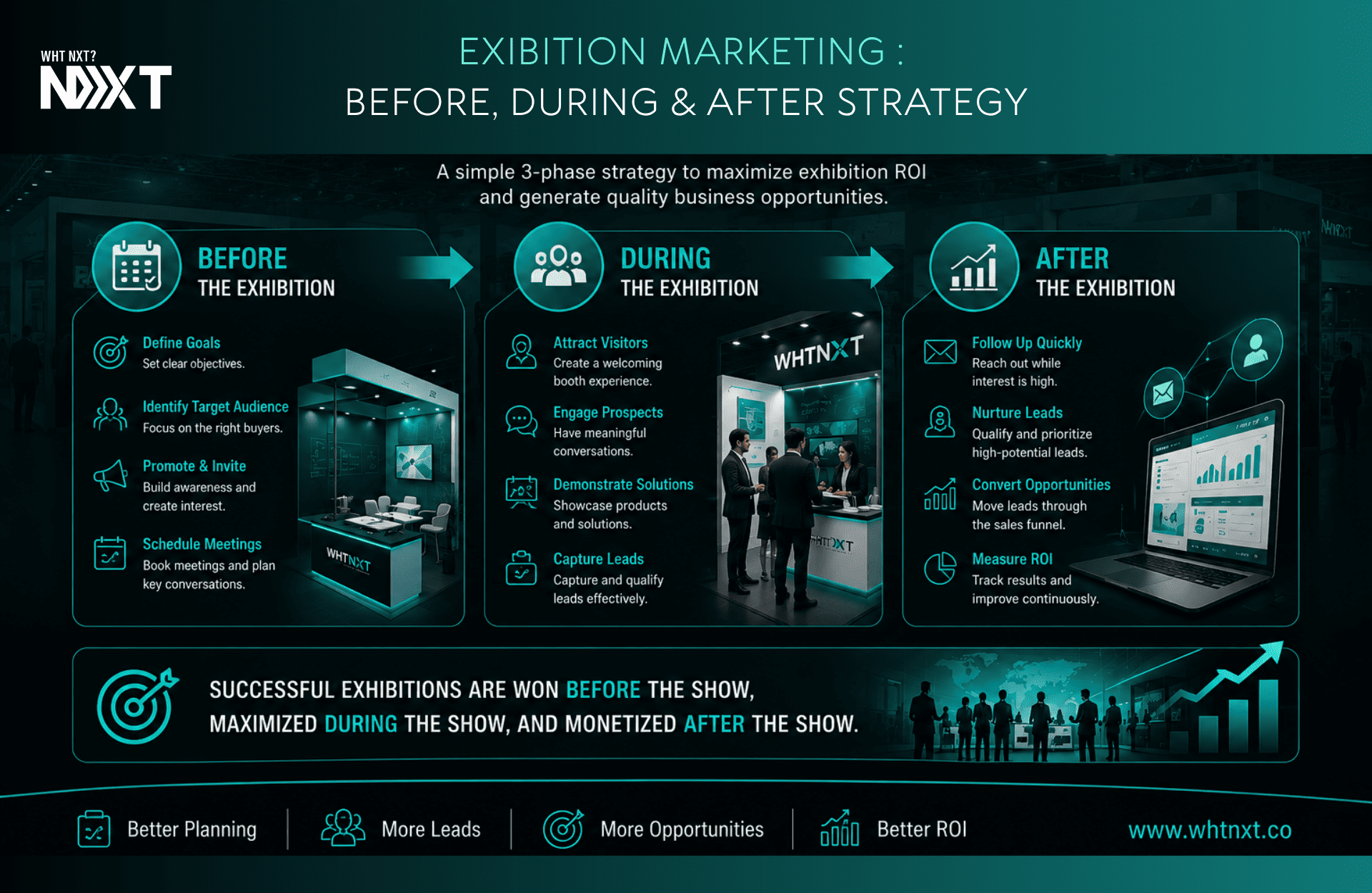
To maximize your Exhibition ROI, you must shift from a transactional mindset to a comprehensive Event Marketing Strategy. True success isn't defined just by what happens when the expo doors open. It is determined by a disciplined, three-phase framework: Before, During, and After the event.
Phase 1: Before the Exhibition – Build Anticipation
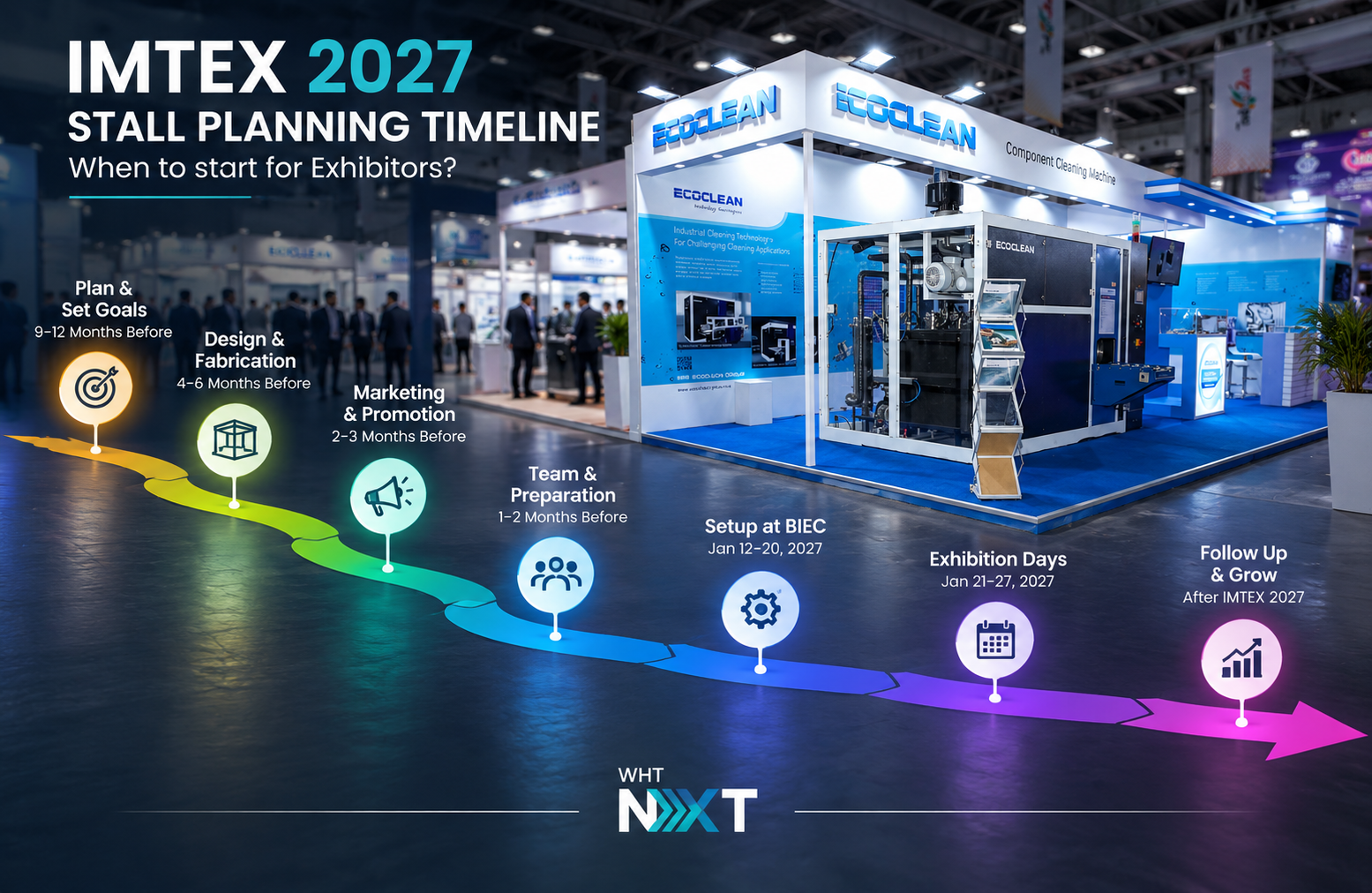
Don't wait for footfall to happen by accident. High-impact Exhibition Marketing starts months before the logistics team even packs a crate.
First, establish clear, measurable objectives. Are you hunting for high-value enterprise accounts, launching a new product line, or looking for regional distributors? Once you pinpoint your target visitors and buyers, start your outreach early.
- Pre-Event Email Campaigns: Send targeted sequences to your existing database and cold prospect lists. Don't just say "visit us at booth H4." Offer an exclusive incentive, such as a first look at a new technology or a downloadable industry report.
- LinkedIn and Social Media Promotion: Run a coordinated campaign highlighting the solutions you will showcase. Use event-specific hashtags and tag the organizers to tap into their broader digital footprint.
- Pre-Scheduled Meetings: Reach out to high-intent prospects and pre-book specific 15-minute meeting slots at your booth. A packed meeting calendar before day one guarantees a baseline level of success.
Key Takeaway: Preparation determines your trade show success. If your target audience doesn't know you are exhibiting before they walk through the convention center doors, you are already playing catch-up.
Phase 2: During the Exhibition – Maximize Engagement
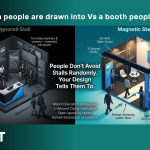
When the show goes live, first impressions dictate your traffic flow. Your Exhibition Booth Design shouldn't just be visually appealing; it must function as a psychological hook. Clear, benefit-driven messaging beats abstract architecture every single time. A passing buyer should understand exactly what problem you solve within three seconds of looking at your booth.
Once attendees step inside, keep them engaged with active rather than passive experiences:
- Live Product Demonstrations: Ditch the passive brochure racks. If you sell heavy industrial machinery or software, run live, scheduled demonstrations. If the physical product is too large, utilize interactive digital displays or VR setups to bring the technology to life.
- Meaningful Staff Conversations: Train your booth staff to avoid defensive or passive body language. They should drop generic scripts like "Can I help you?" and instead lead with qualifying questions such as, "How are you currently managing [specific industry pain point] at your facility?"
- Digital Lead Capture Best Practices: Stop collecting business cards in glass fishbowls. Use digital Exhibition Lead Generation apps to scan badges, allowing staff to add immediate custom notes regarding the prospect's budget, timeline, and requirements right on the spot.
Phase 3: After the Exhibition – Convert Leads into Business
This is where most exhibitors drop the ball. Teams return to the office, bury the lead sheets under a mountain of backlogged emails, and reach out two weeks later when the prospect's enthusiasm has cooled. The post-show period is where the real revenue is won or lost.
To protect your marketing investment, implement a strict follow-up protocol:
- Timely Lead Segmentation: Within 24 to 48 hours of the closing ceremony, segment your captured leads into clear tiers: Hot (immediate requirement), Warm (nurture opportunity), and Cold (low priority).
- Multi-Channel Follow-Ups: Deploy personalized emails that reference specific talking points from your booth conversation. Back this up with brief, professional WhatsApp follow-ups for your highest-priority "Hot" leads to schedule a deeper discovery call while the event is fresh in their minds.
- CRM Tracking & ROI Measurement: Pipe all event data directly into your CRM. To accurately calculate your long-term success, track these event-sourced leads against closed-won revenue over the next two quarters, weighing the revenue generated against the total cost of space, construction, and manpower.
Conclusion
Winning at Trade Show Marketing requires looking far beyond the three days written on your calendar. By executing a structured Before-During-After framework, you transform an expensive branding exercise into a predictable lead generation engine. A striking booth gets you noticed, but a complete marketing strategy ensures those interactions convert into measurable business outcomes.
Ready to elevate your exhibition strategy with WhtNxt?
At WhtNxt, we don't just build stunning, structurally guaranteed stalls; we help you execute a comprehensive, results-driven marketing approach. Backed by our end-to-end delivery framework and in-house graphics production via PrintNxt, we ensure your booth is executed on time, error-free, and optimized for maximum lead generation.
Stop treating your upcoming trade show as a standalone event. Connect with WhtNxt today to discuss your upcoming expo requirements and ensure a measurable return on your next exhibition investment.

Leave a comment
Your email address will not be published. Required fields are marked *