Why AIOC 2027 Matters to Ophthalmic Technology Companies
The AIOC unites ophthalmologists, healthcare professionals, researchers, medical device manufacturers and other stakeholders from across the eye care industry. The conference is a chance for companies wanting to launch new products or reinforce their position in the market to talk directly to the people who understand the practical difficulties of modern eye care. Visitors interested in new diagnostic systems, learning about surgical equipment, comparing technologies or finding solutions to improve their clinical workflows will find it useful to visit.
An exhibition stall is an opportunity for brands to have these conversations in person. Instead of relying solely on online marketing companies can allow visitors to get up close, ask questions and learn how the technology works. A well-planned stall can also help generate qualified business inquiries, attract distributors and open doors for future partnerships. The idea should be to make it easy to explore the technology and to make every interaction help visitors better understand what the brand can do.
Designing a Tech-First Stall
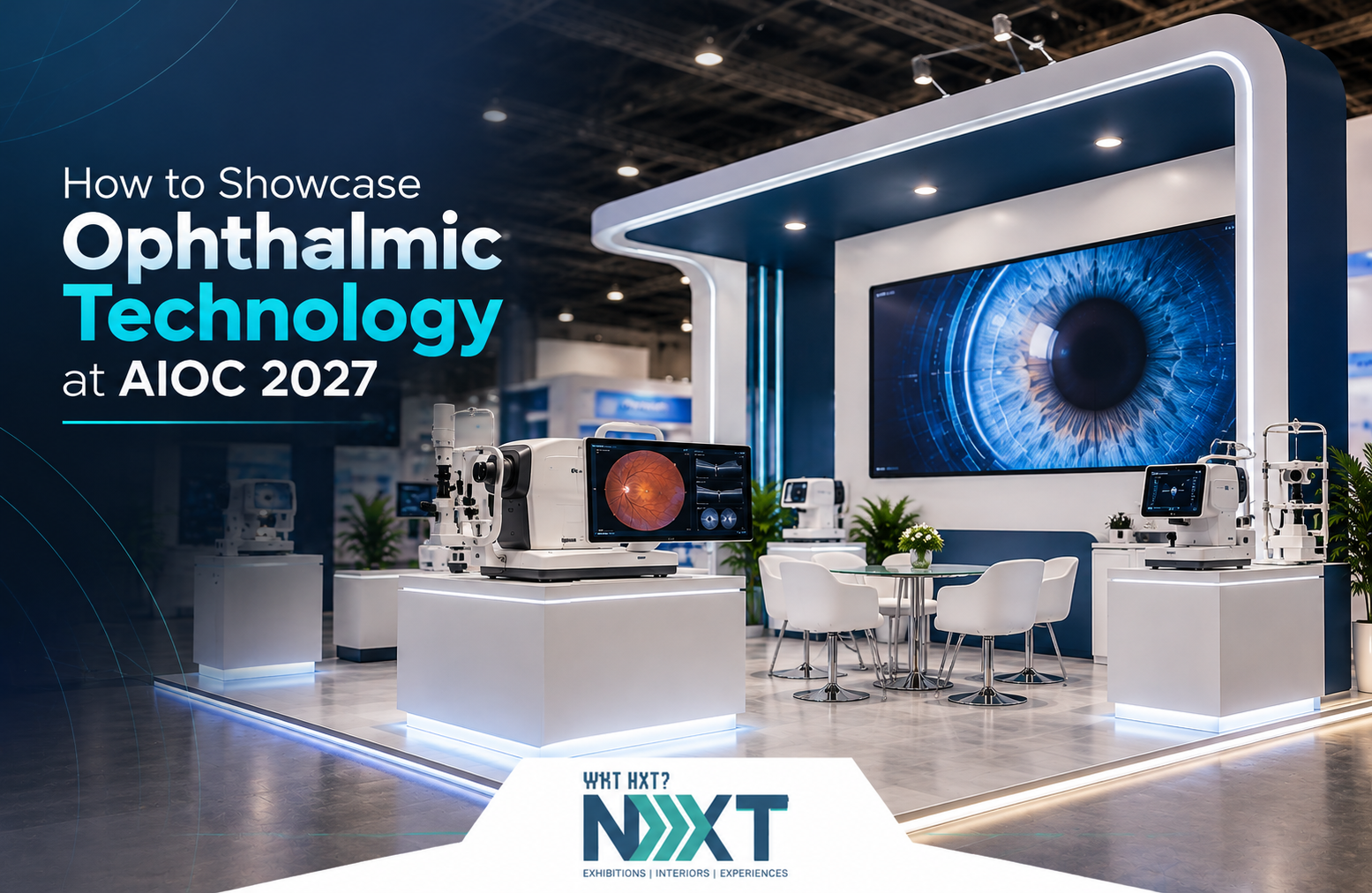
The stall design and the first impression of a brand often come into play when visitors walk into an exhibition. For ophthalmic technology companies, the design should reflect precision, quality and professionalism, without making the space feel overwhelming. A well-organized layout, even lighting, clear product displays and uniform branding can all help create a space that feels fresh and inviting.
The products themselves should remain front and center. Diagnostic instruments, retinal imaging systems, surgical devices and other ophthalmic equipment should be provided with adequate space for visitors to view comfortably. Products that are often demonstrated should be located where staff can explain their features without hindering the flow of other visitors. Dedicated counters, display platforms and consultation areas can help to organize the space and keep it practical.
The design must also take into account how the equipment will be used in the exhibition. Additional clearance or special installation procedures and electrical hook-ups may be required for some products. These requirements should be thought about at the beginning and not handled after fabrication has begun. When the layout is designed around the products and the people who use them, the stall becomes more than a pretty display. It becomes a functional space for product discovery and professional interaction.
Make Product Demos the Center of Attention
Medical technology can sometimes be difficult to get a handle on, even with brochures or technical specs. Visitors may know the name of a product, but they still want to know how it works, what makes it different, and how it might fit into their daily practice. A live demonstration helps answer these questions in a more practical and interesting way.
For example, a company exhibiting retinal imaging equipment could show how the imaging is done and describe the features that help clinicians interpret the results. The manufacturer of the surgical equipment might be able to provide demonstration models or approved simulation systems to describe how the device works. A company with a digital ophthalmology platform may take a visitor through its software, demonstrating how information is displayed and the different features that support clinical workflows.
Such demonstrations should be brief, clear, and pertinent to the audience. Visitors should be able to understand the big benefits without having to go through a long technical presentation. Staff should also be ready to answer in-depth questions from clinicians and other industry professionals. All demonstrations involving medical equipment must adhere to the manufacturer’s instructions and any applicable safety requirements. Patient information and clinical claims must be handled responsibly. A good demo doesn’t just show off the product’s capabilities. It helps people to appreciate the value of the technology.
Digital Displays to Make Complex Technology Simple
Digital displays can add a more interactive element to an exhibition stall and assist companies in showcasing information that might be hard to convey with just physical displays. LED screens, product videos, interactive touchscreens and digital catalogs can present products, explain technical features and show applications in an engaging manner.
For instance, animated images can help visitors to understand how a diagnostic system captures and processes images, and short videos can show the different steps of a product demonstration. Visitors can browse product specifications, compare models on offer or discover the range of applications via interactive screens. In addition, companies presenting AI-enabled solutions can use digital presentations to demonstrate the features and intended role of the solution in clinical workflows.
The important thing is to keep it simple and focused. “Exhibition visitors tend to wander from stall to stall, and they may only have a few minutes to understand what a company is offering. Clear headlines, readable text, relevant visuals, and concise explanations work better than information-heavy screens. Digital technology should facilitate the dialog between the exhibitor and the visitor, not replace it.
Create an Experience for the Visitor
Different visitors come to AIOC with different priorities. An ophthalmologist might want to know about its diagnostic capabilities, its usability, and its clinical applications. A hospital administrator may be more interested in implementation, service support and operational requirements. Distributors and purchasing professionals might be interested in product availability, commercial terms and business opportunities over the long term.
A good exhibition stall should make it easy for every visitor to get the information they are looking for. The technology can be incorporated into product displays, and more in-depth conversations can take place in designated discussion areas. Staff should know the products and be able to discuss their features in a language appropriate to the visitor's level of technical knowledge.
Little details can add to the experience as well. QR codes can link to digital brochures and product information, and inquiry forms can collect business details. Companies can also schedule follow-up meetings or product demonstrations for visitors who require more time to evaluate a solution. If the experience is informative and comfortable, brands can build a deeper connection with the people visiting their stalls.
Be Clear, Consistent and Credible with Branding
At a busy medical trade show, visitors will come across a number of companies with what appear to be similar products at first glance. Clear branding enables a company to communicate who it is and why its solutions are worth considering.
Rather than filling the booth with sweeping claims of innovation, companies should focus on specific product attributes, practical uses and proven benefits. It is important that product names, key messages and supporting visuals are easily visible from different places in the exhibition space. Maintain the same visual identity in the stall design, digital presentations, brochures and staff materials.
Credibility is important in the medical technology sector. Visitors may be questioned on product specification, regulatory approvals, certifications or performance evidence. Providing the right information and making sure staff feel okay answering these questions builds trust. A good exhibition branding should make the technology easier to understand and at the same time strengthen the professionalism of the company.
Plan Fabrication and Logistics Prior to Event
A strong exhibition concept can only be successful if it is backed by careful planning and reliable execution. Preparing for AIOC 2027 cannot be just about finalizing a design. Businesses should pre-arrange on available space for the exhibition, product size, electrical requirements, transportation, installation timing and event regulations. Experienced AIOC stall fabricatorscan help ophthalmic technology brands create professional exhibition spaces with engaging product displays, interactive demonstrations, and functional layouts for AIOC 2027.
Ophthalmic equipment may require careful handling, special installation procedures or additional technical support. "The details should be worked out with the equipment suppliers and the fabrication team before the final design. Storage areas, cable management, lighting and the movement of staff should be considered to ensure the stall remains organized throughout the event.
A modular design or a custom-built stall is a choice that depends ultimately on the objectives of the company, the budget and the future exhibition plans. A bespoke stall might give you more design freedom, or a modular structure might be used at other medical conferences. Whatever the path taken, early coordination between brand, equipment supplier and fabrication team can help prevent late changes and additional costs.
Convert Exhibition Visitors into Business Opportunities
A successful exhibition is not just a matter of appearance, or of numbers of visitors. Equally important is what happens when someone comes to the stall. Companies need to determine their goals before AIOC 2027. Goals could be generating qualified leads, setting up product demonstrations, meeting distributors, or building relationships with healthcare institutions.
The team should record relevant inquiries and note what each visitor is interested in during the event. Following up these contacts with product information, requested quotations, technical discussions or meeting invitations after the conference. Prompt communication keeps the conversation alive and gives the prospective customer a clear next step.
The feedback from visitors can also help companies determine which products attracted most attention and which features garnered the most interest. This information may be useful for the planning of future marketing campaigns, presentations of products and exhibitions. When businesses tie stall design to lead generation and follow-up, their participation is a more intentional investment.
Final thoughts: Showcasing Ophthalmic Innovation with WHTNXT
For ophthalmic technology companies, AIOC 2027 provides a platform to showcase their innovations, engage with healthcare professionals and increase their presence in the eye care industry. To make the most of this opportunity, the stall has to be well designed, have engaging product demonstrations, useful digital content and good on-ground execution. Most importantly, the experience of the exhibition should help the visitors to understand the technology and see how it relates to their professional needs.
WHTNXT is a design, fabrication and planning studio creating immersive display environments to realize exhibition ideas for businesses. A reliable custom exhibition stand companycan help ophthalmic technology brands create engaging exhibition spaces that showcase their products and attract healthcare professionals at AIOC 2027. Whether a company is exhibiting diagnostic equipment, state-of-the-art imaging systems or the latest in ophthalmic innovation, the right display setup can make its products more approachable and its brand more memorable. For businesses preparing for AIOC 2027, WHTNXT can help create a professional, functional and engaging exhibition space with the technology at the heart of the experience.

Leave a comment
Your email address will not be published. Required fields are marked *