In the high-energy arena of a trade show, the "wow factor" has moved beyond physical architecture. Stalls are no longer just static wood-and-paint structures; they are evolving into immersive brand experiences.
The goal hasn't changed—you still want to attract and convert—but the tools have. Today, if your stall isn't tech-enabled, it’s effectively invisible to a generation of digital-native attendees.
The Shift: From Static Displays to Living Spaces
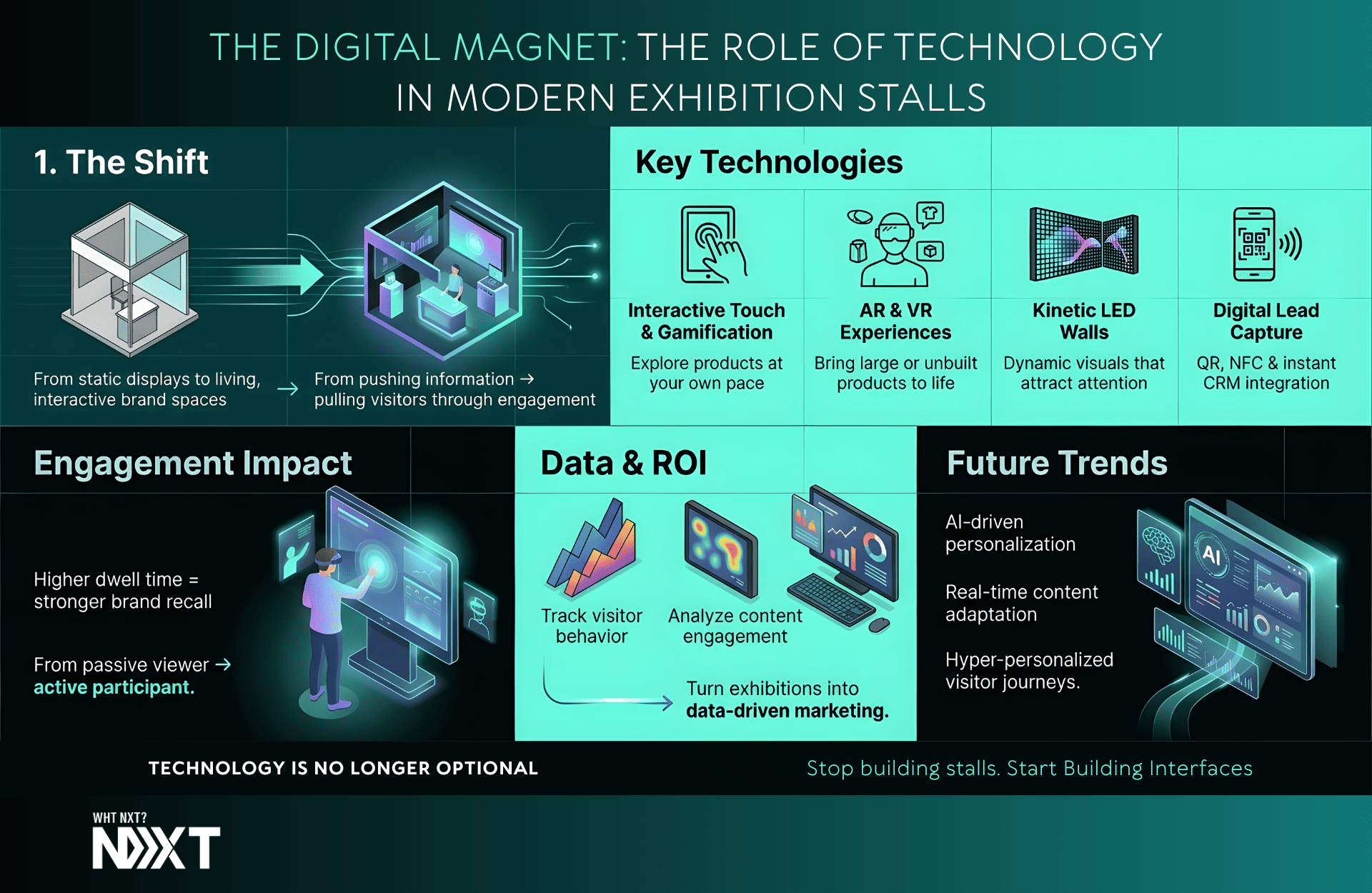
The traditional booth was a backdrop for a conversation. The modern stall is the conversation. We have moved from "pushing" information via printed banners to "pulling" visitors in through interactive discovery. This shift is driven by a simple truth: Interactive engagement creates deeper memory than passive observation.
High-Impact Technologies for the Floor
1. Interactive Touch Surfaces & Gamification
Replace the dusty brochure rack with a large-format touch screen or interactive table.
- Why it works: It allows visitors to explore your product catalog at their own pace.
- Example: A manufacturing brand using a touch table to let visitors "build" their own machinery configuration in 3D.
2. AR & VR: Solving the Space Problem
Augmented and Virtual Reality are the ultimate space-savers. If your product is too large to fit in a 6x6 meter stall, VR brings it to the visitor.
- Impact: A real estate developer can walk a prospect through a penthouse that hasn't been built yet, right from the exhibition floor.
3. Kinetic LED Walls
Static lightboxes are being replaced by LED walls that react to movement or change content based on the time of day. This constant motion acts as a visual siren, pulling eyes from across the hall.
4. Seamless Digital Lead Capture
The clipboard is dead. Modern stalls use integrated QR codes, NFC badges, or "Digital Swag Bags" where visitors tap their phones to receive PDFs, instantly syncing their data into your CRM.
Driving Dwell Time and Brand Recall
Technology isn't just "flash"—it’s a strategy to increase dwell time. The longer a visitor interacts with a digital demo or a VR headset, the more they are insulated from the distractions of the surrounding hall.
When a visitor does something—clicks a screen, wears a headset, or plays a digital challenge—they transition from a passive passerby to an active participant. This physical involvement significantly boosts brand recall long after the show ends.
Smart Insights & The ROI of "Digital Footprints"
One of the greatest advantages of tech-driven stalls is the data.
- Heat Mapping: Sensors can track which areas of your stall saw the most traffic.
- Content Analytics: You can see exactly which video or product page was clicked the most on your touch screens.
This turns a trade show from a "gut feeling" event into a data-driven marketing channel. You finally know exactly what your audience cares about.
The Future: AI and Hyper-Personalization
We are already seeing the rise of AI-driven concierges—smart screens that use facial recognition (with consent) to identify a visitor's persona and serve them tailored content instantly. The next generation of stalls will be "hyper-personalized," changing their messaging in real-time to match the person standing in front of them.
Conclusion: Technology is No Longer Optional
In the modern exhibition landscape, technology is the bridge between physical presence and digital conversion. It’s the difference between being a stall that someone saw and a brand that someone experienced.
Adopting technology isn't about being trendy; it's about being effective. If you want people to walk into your stall, stay longer, and remember you later, you must build a space that speaks the digital language of today’s visitor.
Stop building stalls. Start building interfaces.

Leave a comment
Your email address will not be published. Required fields are marked *