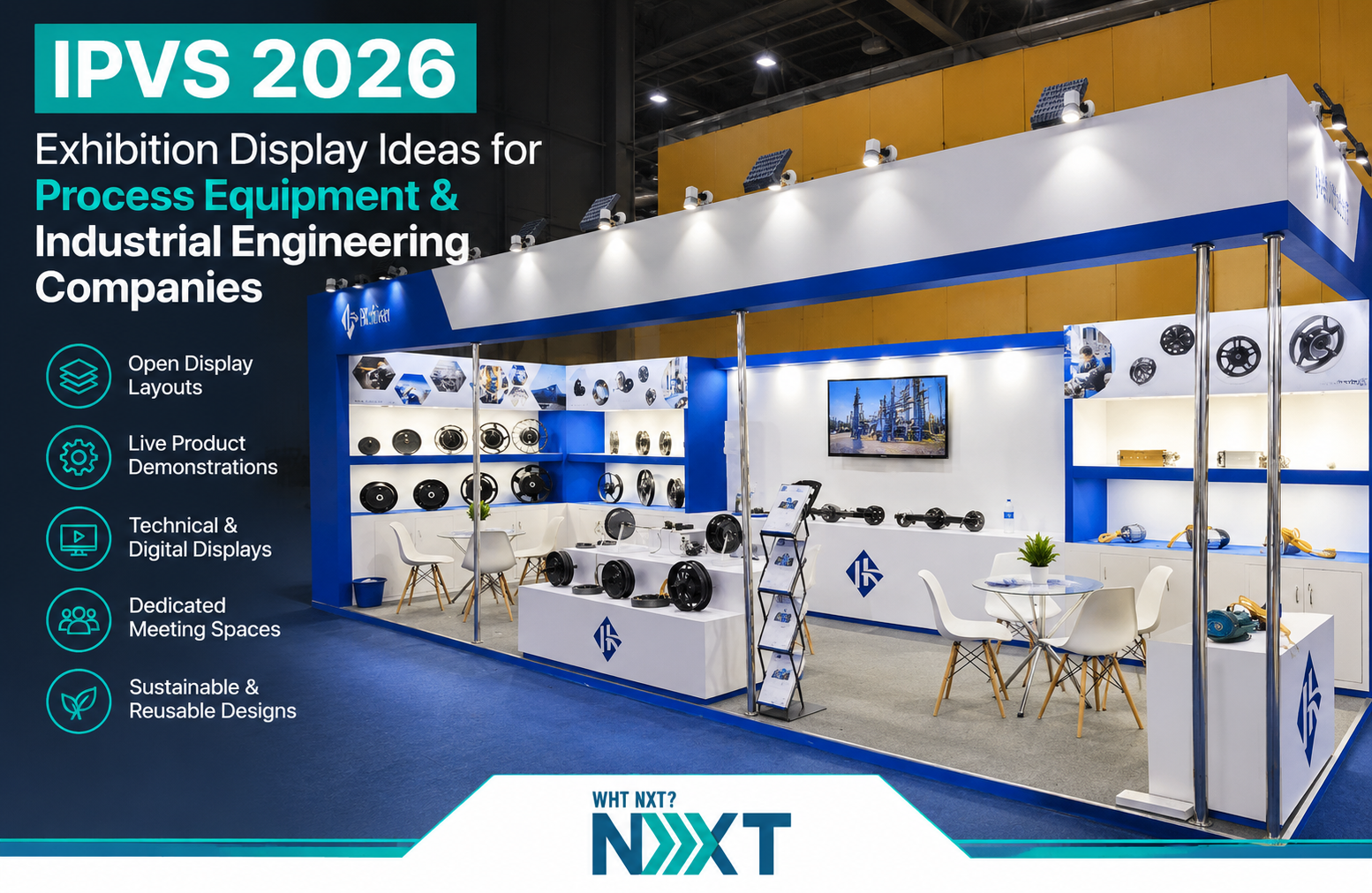
For companies operating in process engineering, industrial manufacturing, production systems, and equipment supply, the exhibition stand becomes an important part of their brand communication strategy. From machinery demonstrations to interactive product displays, technical information zones and dedicated meeting spaces, everything should have a clear purpose.
A well-designed exhibition display can help companies stand out from the competition and make complex industrial solutions easier to understand. Here are some effective exhibition display ideas for process equipment and industrial engineering companies to consider for IPVS 2026.
1. Develop an Open Display Layout for Industrial Equipment
Industrial equipment often takes up a lot of space, so stand layout is one of the most important design decisions. Instead of putting up many display structures in the exhibition area, companies could consider an open layout that allows visitors to wander freely among the machinery, equipment models and product demonstrations.
Position large equipment strategically so that visitors can view it from different angles. Smaller components, accessories and technical products can be incorporated into dedicated display sections. This provides a more orderly presentation without making the stand feel crowded.
An open layout also facilitates interaction between sales representatives and technical specialists with visitors. Well-defined entry points, accessible demo areas, and clearly marked product areas can help direct visitor traffic and spark meaningful conversations.
2. Create Dedicated Spaces for Product Demonstrations
It can be more effective for process equipment and industrial engineering companies to show how a product works than just listing its specifications. Before making a business inquiry, visitors frequently ask how a machine works, how it is operated, how efficient it is and what practical uses it has.
Dedicated demonstration zones built into the exhibition stand itself can demonstrate equipment functionality, component operations or simplified production processes. Depending on the product, these demonstrations may be hands on models, machinery demonstrations with controls, cutaway equipment or digital simulations.
The size of the demonstration area should be sufficient to allow visitors to view the equipment without blocking other parts of the stand. Safety barriers, clear instructions on how to operate, and scheduled demonstrations would improve the experience even more.
A careful design makes the demonstration zone turn the exhibition stand from a conventional product display into an interactive technical environment.
3. Use of Industrial Grade Materials and Functional Buildings
The materials for an industrial exhibition stand should correspond with the character of the company’s products and services. Durability, precision and technical reliability are expressed in materials and finishes that can be used by process equipment manufacturers and engineering companies.
Metal frameworks, aluminum profiles, engineered surfaces, industrial textures and durable flooring can lead to a professional visual identity. Products can be highlighted or technical information delivered through the use of glass panels, acrylic displays and illuminated surfaces.
The whole structure should balance industrial esthetics and modern exhibition design. Too much ornamentations can distract the attention of the visitor from the machinery and products displayed. Rather, the design should be built on clean lines, structured display and deliberate lighting to form a strong industrial identity.
“We want to make the exhibition space look professional but practical, so we can show the products and do business.
4. Technical Information and Digital Display Screens
For industrial buyers, technical specifications, performance capabilities, applications, and operational advantages are typically considered when evaluating products. If you can make this information available in a consumable way it can improve the quality of visitor interactions.
Exhibition stands can incorporate digital screens to display product specifications, manufacturing processes, animations of equipment, technical videos, and examples of applications. Large format LED displays can relay the company’s capabilities from afar while smaller screens can provide detailed product information within individual display zones.
Interactive touchscreens can also allow visitors to browse product catalogs, technical diagrams and application-specific solutions at their own pace.
“But digital displays should be supplementing physical product displays, not replacing them.” The mix of real equipment, physical samples and digital explanation makes for a more holistic experience for industrial visitors.
5. Create Distinct Zones for Various Product Categories
If a company has several types of process equipment or engineering solutions, they should not all be placed in one display area without separations. A structured exhibition stand with distinct product categories helps visitors find the right solutions more easily.
For example, a company may divide its exhibition space into areas for processing equipment, material handling systems, industrial components, and automation solutions and engineering services.
Each section should be clearly signed, consistently branded and with relevant product information. You can tell the categories apart using individual display structures or color-coded panels without changing the overall design.
This is particularly helpful for companies with large product portfolios. Visitors can quickly navigate the exhibition stand and spend more time exploring products that suit their operational needs.
6. Show Engineering Strengths with Visual Storytelling
An exhibition stand in the industrial sector needs to say more than the products of a company. It should also be a reflection of the engineering knowledge, the manufacturing expertise and the problem-solving abilities that are put into those products.
Visual storytelling can do that. Large-format graphics, process diagrams, project photos, manufacturing visuals, and application-based displays can all be employed to showcase how a company's solutions function in an industry.
For example, a manufacturer of process equipment can demonstrate a simplified flow of the movement of raw materials through various stages of processing. An engineering company can use a structured visual presentation to show its design, fabrication, installation and commissioning capabilities.
The displays enable visitors to comprehend the expertise of the company without the need for lengthy explanations from the sales team.
7. Make Space for Comfortable Technical Conversations
Industrial exhibitions attract procurement professionals, plant managers, engineering consultants, business owners and technical decision makers. Many of these visitors come with specific needs and may want to talk about custom solutions, project specifications, or possible business partnerships.
Having a specific meeting area within the exhibition stand can help to facilitate these conversations. Small discussion areas should be built into the overall design rather than placing seating randomly.
Semi-private meeting areas, comfortable seating, small tables for discussion and easy access to product information can provide a professional environment for business meetings.
The meeting area should be connected to the main display so the reps can easily lead visitors to relevant equipment or demo sections during the discussion.
8. Lighting for Strategic Spotting of Equipment and Displays
Lighting is important for the industrial exhibition stands to be visually attractive and functional. Inadequate lighting of machinery may prevent visitors from observing product details and over-lighting can create glare and visual discomfort.
A mix of ambient, accent and task lighting can help to create a balanced exhibition environment. Spotlights can be used to highlight key machinery and product models, while integrated LED lighting can be used to highlight branding, display shelves and structural elements.
For equipment with complex components, focused lighting can allow visitors to see particular features better. Also, the lighting around the demonstration areas should be considered so that the technical operations can be seen throughout the exhibition.
The right lighting approach makes the products more visible and gives the exhibition stand a polished and professional image.
9. Use Sustainable and Reusable Exhibit Elements
Planning exhibitions with sustainability in mind is becoming a key consideration. If you attend a variety of industry events, it makes sense to have stand designs that are modular, reusable and adaptable to different exhibition spaces.
Reusable aluminum frameworks, modular display panels, recyclable materials and energy-efficient lighting can help reduce the need for completely new structures at each event.
Modular exhibition systems are also flexible. Depending on the available floor area and exhibition requirements, product display sections, branding panels, storage areas and meeting spaces can be reconfigured.
For companies who exhibit regularly at industrial exhibitions this approach can help to ensure long term cost efficiency whilst maintaining a consistent brand presentation.
10. Put Brand Visibility Front and Center of the Display
A technically impressive exhibition stand needs strong branding for recognition. Visitors should be able to quickly understand who the exhibiting company is, what its main business offerings are, and remember its brand after leaving the exhibition.
Company logos are to be prominently displayed on overhead structures, reception counters and important display surfaces. Brand colors, typefaces and messaging should be consistent throughout the exhibition environment.
Companies should replace vague marketing language with clear value propositions that highlight their expertise and product advantages. Technical audiences might find the brand message more meaningful if it includes statements that highlight manufacturing capabilities, engineering specializations or industry applications.
A consistent branding strategy allows the exhibition stand to communicate product quality and corporate credibility.
Planning an Exhibition Stand for IPVS 2026
Planning for an exhibition should begin well in advance to allow time for design development, fabrication, branding and technical coordination. In the first planning phase, companies preparing for the exhibition should consider the size of the equipment, the electricity requirements, the transport of machines, the demonstration needs and the visitor engagement goals.
IPVS EPO 2026 DatesIPVS 2026 dates are 3 – 4 December 2026. The exhibition is scheduled at HITEX Exhibition Center, Hyderabad. The event will bring together manufacturers, OEMs, EPC companies, industrial buyers and technology providers from industries such as pumps, valves, chemicals, pharmaceuticals, water treatment and oil and gas and process engineering. Having the event calendar and exhibition requirements in advance can enable businesses to come up with a display that meets their participation objectives.
The exhibitors should aim at building a stand that combines technical presentation with effective brand communication. It is important to think of machinery placement, demonstration facilities, visitor movement and meeting spaces as a whole rather than as separate design elements.
Summary
Process equipment manufacturers and industrial engineering firms can use the IPVS 2026 exhibition to showcase their technologies, strengthen industry relationships and connect with potential business partners. To get the best out of this opportunity you will need a stand that communicates technical expertise and provides a professional and engaging visitor experience. From open machinery displays and live product demonstrations to interactive digital screens and dedicated business meeting areas, all elements should be aligned with the company’s exhibition objectives. And that’s where WHTNXT can make a difference. WHTNXT is an experienced exhibition design and build partner, dedicated to creating bespoke exhibition spaces that combine practical functionality with strong branding and powerful presentation. WHTNXT can help transform exhibition spaces into effective brand experiences, whether a company needs a machinery-focused display, a modular exhibition structure or a fully customized industrial booth. If you’re gearing up for IPVS 2026, collaborating with a reputable custom exhibition stand company can help ensure your exhibition presence is a reflection of your engineering prowess and leaves a lasting impression on industry visitors.