Design a Stand Around Business Objectives
The first step to a successful DSEI Japan stand is to understand what the exhibitor is trying to achieve. An established manufacturer may be seeking to deepen relationships with existing customers or showcase new capabilities, whereas a defense technology company entering the Japanese market may be looking to build new partnerships. Some others may want to generate qualified inquiries, showcase equipment or create opportunities with distributors and technology partners.
A professional stall fabricator needs to know these objectives when developing the design. Then the stand should be designed based on the desired journey of the visitor. Instead of just creating a structure because it looks impressive, the design must answer practical questions such as where the visitor will first encounter the brand, how the products will be displayed, where demonstrations will take place and where serious business discussions will be held.
This turns the exhibition stand into an environment for business development instead of a physical structure.
Making a Good First Impression
The exhibition stand is often the first physical contact of a visitor with the company at the event. First impression counts in the competitive environment of a defense exhibition. But the visual impact must not be achieved at the cost of clarity.
The challenge for stall fabricators at DSEI Japan is to produce a stand that grabs attention and immediately communicates the company’s identity and capabilities. “Branding, architectural elements, lighting, digital screens, product displays and graphics should be there for a reason and not just to fill space.
A good stand design should be able to tell who the company is, what it does and why it may be relevant to a visitor walking through the aisle. A good messaging, paired with a professional architectural identity, can help you build that first point of interest.
Simplification of complex defense technologies
Defense products and technologies can be very technical. A visitor may have to learn about several features, applications and capabilities before he wants to go into detail. Exhibition design can help make that process easier.
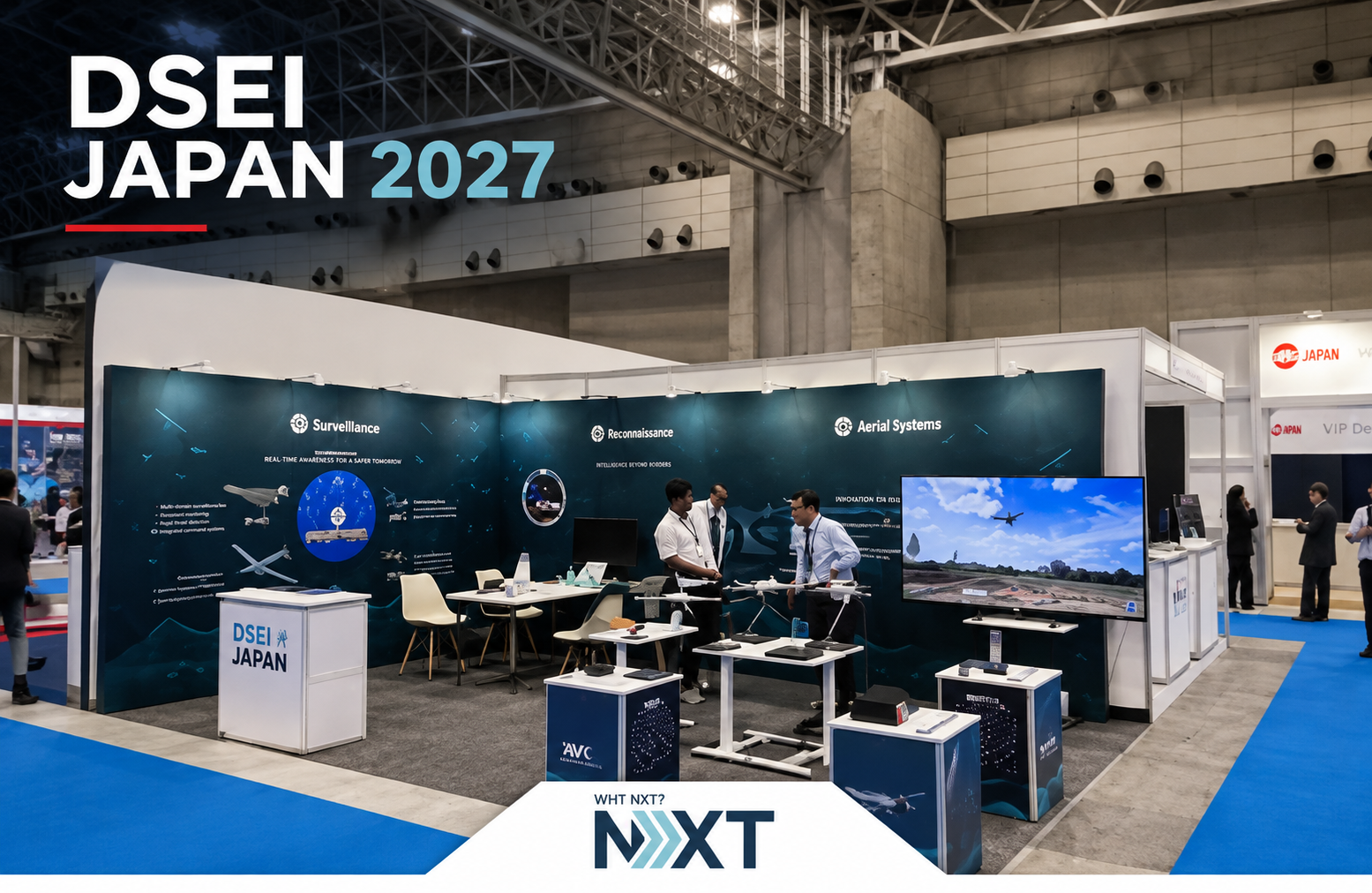
The product demonstration areas can be designed for adequate space and visibility for important technologies. Physical equipment, scale models, interactive displays and digital presentations can be used in the stand without creating an over-crowded feel to the environment.
An experienced booth fabricator can design areas for specific product categories or applications as well. This makes it easier for users to navigate and allows sales teams to direct visitors to the most relevant information.
The objective is not just to showcase a product. The aim is to build a context in which the product can be understood as part of the company’s broader capabilities.
Build Meeting Rooms – Private and Professional
Defense exhibition business discussions can be a minefield of sensitive commercial information, partnership opportunities and detailed technical conversations. So areas to meet should be an important part of the stand design.
The stand can have open meeting tables, semi-private discussion areas or closed meeting rooms, depending on the exhibitor’s needs. The design needs to offer enough privacy but also make the stand feel accessible.
This is one area where experienced DSEI Japan booth fabricators can make a lot of difference. A careful division of the available exhibition space between product displays, visitor engagement areas, staff zones and meeting rooms is needed. Poor planning can result in a stand that looks good but lacks sufficient functional space for the conversations that matter.
Designing for the visitor flow
Another important factor in the design of a defense exhibition stand is visitor flow. A stand shouldn’t feel like a hodgepodge of separate displays. Visitors need to be able to flow easily from one space to another.
The entrance can communicate the company and its core message, while product displays and demo areas can invite visitors to go deeper. And so meeting areas are a natural place to continue the conversation.
Lighting and architectural features can also be used to draw attention to important products, brand messages or demonstration areas. If planned properly, the physical layout supports the sales team’s conversations rather than creating obstacles.
Blending Technology and Physical Design
Digital technology is a significant component of the contemporary exhibition environment. Large LED displays, interactive touchscreens, digital product presentations and immersive demonstrations can help exhibitors convey complex information in a more engaging manner.
But technology should serve some purpose. A big screen that is just a big screen playing a corporate video is not adding much value if it doesn’t contribute to the visitor experience. The stall fabricator needs to think about how the digital components will relate to the physical structure.
For example, an interactive product catalog can be placed next to a demonstration area so that visitors can explore technical information after seeing the product. If you have a big screen it can give the bigger picture of what the company can do. Smaller screens can give more detailed information on individual products.
This combination of physical and digital experiences can make the stand more informative without being oversaturated with printed materials.
Finishes and Materials for a Defense Exhibition
The choice of materials is important to create the visual character of a defense exhibition stand. Flooring, wall finishes, metal structures, glass, acrylic, lighting and branding elements affect the perception of the whole space.
For a professional defense environment the design generally needs to communicate precision, reliability and technological capability. This doesn't necessarily mean making it overly complicated. Often a stronger result can be achieved through clean architectural lines, controlled lighting and high quality finishes, well integrated branding. DSEI stall fabricators create strategically designed exhibition spaces that combine strong branding, functional layouts, product displays and professional finishes to support meaningful visitor engagement.
The experienced stall fabricator must also think about practical things like durability, installation requirements, venue regulations, and transportation of the fabricated elements. A design that is visually strong also needs to be realistic to build, install and dismantle within the exhibition schedule.
Fabrication: Pre-event Planning is part of it
Good exhibition execution happens well before the event. Once the design direction is approved, there is a need for careful coordination for fabrication, graphics, electrical planning, logistics, installation and venue requirements.
This sort of planning is especially critical for an international event like DSEI Japan. Early consideration should be given to fabrication timelines, shipping requirements, installation schedules and venue regulations to avoid last-minute complications.
The stall fabricator thus becomes an important project partner for the exhibitor. Good and consistent communication between the exhibitor, designers, fabricators and event teams helps ensure the final stand is in line with the approved concept and business requirements. DSEI booth fabrication combines strategic design, durable construction, engaging product displays and functional meeting spaces to create a professional exhibition environment that supports meaningful business conversations.
Designing the Booth to Generate Leads
A nice exhibition stand can attract attention but its real worth is what happens when people walk into it. The layout should facilitate conversations and make it easy for the sales team to engage with relevant prospects.
Little things can make a difference. Longer conversations can be aided by good seating. Product displays in the vicinity of meeting areas can be useful talking points. Digital lead-capture systems can be used by sales teams to collect visitor data, and clearly defined demonstration areas can prompt prospects to investigate the company's offerings.
The stand should be designed with the visitor experience and lead-generation objectives in mind.
THE EXHIBITION DOES NOT CLOSE WHEN THE EVENT CLOSES
The physical stand may come down after DSEI Japan, but the business opportunities created during the event can last for months. That’s why it’s important for exhibitors to capture leads and conversations effectively.
This highlights the importance from a stall fabricator’s perspective of designing a stand that facilitates the whole exhibition journey. The idea isn’t to make something pretty for a few days. It is to create an environment that helps the exhibitor communicate its capabilities, meet the right people and build relationships beyond the exhibition floor.
WHTNXT at DSEI Japan 2027
For companies preparing to attend DSEI Japan 2027, the exhibition stand can be an important component of their wider business development strategy. WHTNXT’s approach to exhibition projects is design, fabrication and experience, creating spaces built around the exhibitor’s brand, products, audience and business objectives.
WHTNXT is a specialist in creating exhibition environments that are visually distinctive and commercially functional, from concept development and spatial planning to trade show booth fabrication, branding, product display areas, meeting spaces and on-site execution.
At a specialized event like DSEI Japan, the aim should not be to create an eye-catching stand. The goal is to create a professional environment where visitors can learn about the brand, experience the capabilities, engage with the team and have conversations that can lead to meaningful business relationships.
So a well-planned and professionally produced exhibition stand can do a lot more than just occupy floor space. It can be the physical base of a company’s presence, communication and business-development efforts at DSEI Japan 2027.

एक टिप्पणी छोड़ें
आपका ईमेल पता प्रकाशित नहीं किया जाएगा। आवश्यक फ़ील्ड * से चिह्नित हैं