What Do We Want to Gain from the Exhibition?
For companies exhibiting at IMTEX 2027, the first question should not be, “When should we contact a stall fabricator?” A better question to ask might be: “What do we want to gain from the exhibition?” IMTEX is the convergence of manufacturers, machine tool companies, automation providers, technology businesses, OEMs, engineering professionals and decision makers across industries. There's such a lot of companies vying for attention that simply having a large or attractive stall may not be enough. When exhibitors walk into the space they should be thinking about what they want visitors to see, understand and remember.
When Should Planning Start?
This is why ideally the plans should start about six to nine months before IMTEX 2027. Companies with big machinery, large exhibits, international teams or major product launches may need even more flexibility and will want to start even earlier. By planning ahead, businesses can appreciate their objectives, decide what products they wish to display, create the right stall concept and co-ordinate fabrication, logistics, marketing and sales activities without unnecessary pressure.
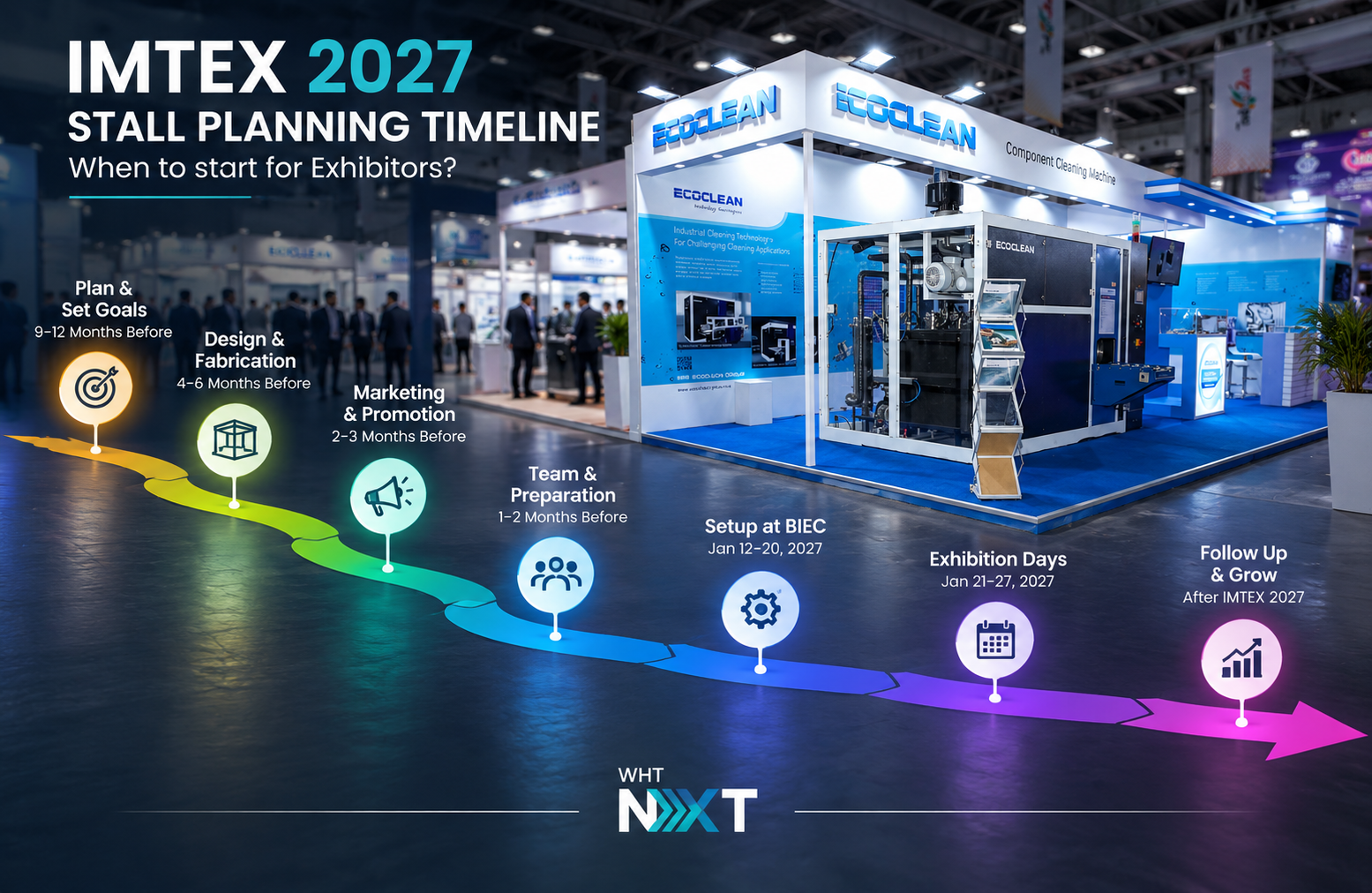
9–12 Months Before: What Is the Purpose of the Exhibition?
The first phase of planning must concern the purpose of the exhibition. While some companies may be looking to generate new business leads at IMTEX, others may be looking to launch a new machine, showcase technology, meet existing customers, find distributors or simply strengthen their presence in the Indian manufacturing market. These goals should shape almost every decision going forward. A product demonstration company, for instance, may require more open space and specific areas for demonstrations. In contrast, a business that is primarily focused on meetings may require comfortable discussion areas where sales teams can speak to prospects without distractions.
Knowing Your Target Audience
Knowing your target audience is important too. IMTEX attracts professionals from manufacturing, automotive, aerospace, defense, engineering, electronics, infrastructure and other sectors. Exhibitors should focus on the audiences most relevant to their business, rather than trying to reach everyone. Once that’s clear, developing the stall messaging becomes much easier. The people the company wants to attract can be the basis for the design, product displays, graphics and demonstrations.
6–9 Months Before: Developing the Stall Concept
“Companies can start working seriously on their stall concept about six to nine months before the exhibition. It’s here where the exhibition strategy begins to become a physical experience. Exhibitors should consider how a visitor will walk through the stall and not just where to put the company logo and product images. What will they be watching? How do we stop them?” Where do they learn about the product? Where can they talk to a sales rep? Where does a detailed business discussion take place?
Planning for Large Machinery and Equipment
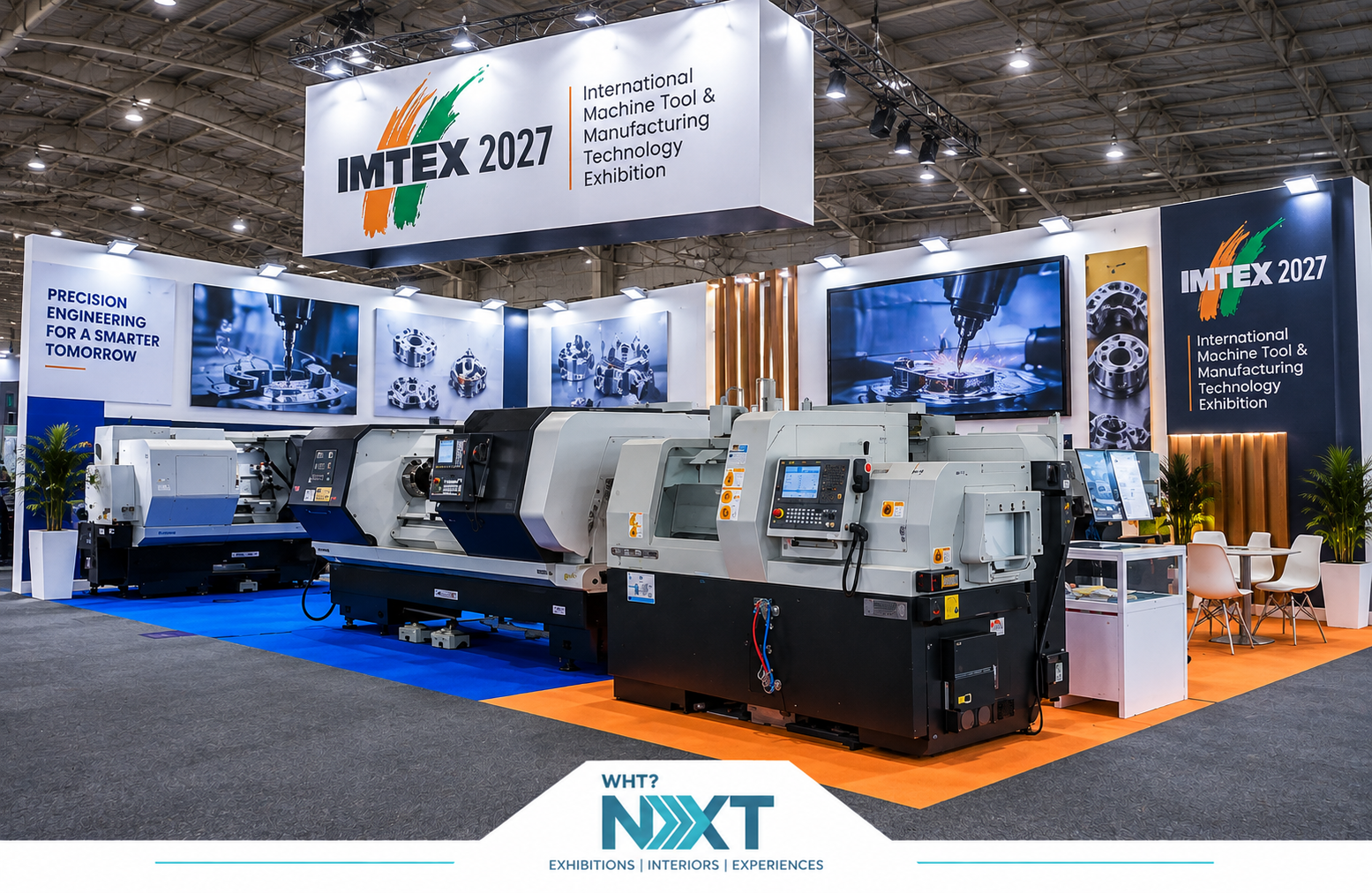
This is especially important for manufacturing and engineering companies when showing large machinery or equipment. A machine can take up a lot of floor space and its placement can affect the whole stall layout. The company has to think about visitor movement, demo areas, technical requirements, storage, meeting spaces and accessibility. These details are much easier to handle if they are thought of months in advance, not the last days before the exhibition.
Keeping the Stall Design Clear
The design phase should also be clarity-focused. An exhibition visitor might spend only a few seconds looking at a stall before deciding whether to enter or not. If the branding is overly complicated or the messaging is buried under too much text, the chance to grab that visitor can go quickly. The stall needs to say as quickly as possible what the company does and what makes its offering relevant. Strong visual communication, clear product positioning, and judicious use of space can help make the experience far more effective.
4–6 Months Before: Detailed Design and Fabrication Planning
The idea should be in detailed design and fabrication planning four to six months prior to IMTEX. At this stage the company and its stall partner should know what structure, materials, lighting, graphics, furniture, product displays and technology they will need. Any special requirements for machinery, electrical hook-ups, storage or demonstrations should also be taken into consideration at this stage.
Using Technology With Purpose
Technology has a big part to play in the modern exhibition stall but it must have purpose. Interactive screens, digital product demonstrations, videos and 3D visualizations can make complex industrial products easier to understand, but should support the visitor experience rather than simply act as decoration. The best exhibition technology is usually the technology that helps answer a visitor’s question, demonstrates a product more clearly or starts a conversation with the sales team.
2–3 Months Before: Connecting the Stall With Marketing
Marketing is another important part of the planning process. An exhibition stall should not be regarded as a stand alone activity. Companies can begin creating awareness among customers, prospects, distributors and industry professionals two to three months before IMTEX. LinkedIn posts, email campaigns, product launches and direct invitations can help build interest before the exhibition even opens.
Creating Better Quality Conversations
This pre-event communication can also help companies to generate better quality conversations at the exhibition. Rather than waiting for visitors to find their way to the stall, businesses can invite selected prospects to come to meet their team at a specific time. This can be particularly useful for B2B companies, as the real goal is not just driving footfall. The idea is to create conversations that matter, which can lead to business opportunities.
1–2 Months Before: Preparing the Exhibition Team
The people representing the company at the stall must also be ready. A well-designed stall will not deliver results if the team within it does not know how to engage with visitors. Sales and marketing teams need to know what products they are promoting, to whom they are promoting them, the most important points to be made about the products, and how to capture and qualify leads. Staff must be able to identify if someone is a potential buyer, industry professional, distributor, existing customer or just a visitor looking for information.
Planning Lead Management
So lead management needs to be planned before the exhibition commences. Just because you have hundreds of business cards doesn’t mean you’re generating qualified leads. The team should collect useful information about the visitor, their requirements and the likely next step. This makes the follow-up after the event much more meaningful and means that valuable conversations are not forgotten after the exhibition.
Final Few Weeks: Moving From Strategy to Execution
As IMTEX approaches, the focus should slowly shift from strategy to execution. The major decisions need to be made in the last few weeks. Review and approve artwork, product information, presentations, equipment needs and branding. The team should know who is going to do set up, demos, visitor engagement and meetings. This avoids the possibility of last-minute confusion and allows everyone to concentrate on the exhibition itself.
Preparing for the Setup Period
The setup period is also a big part of the process. IMTEX 2027 will be held from January 21 to 27 and the official setup period will be before the exhibition. If the company is showcasing large machinery or complex equipment, coordination between the exhibitor, logistics team, technical team and stall fabricator is essential. The sooner these requirements are discussed, the easier it is to organize installation and to make sure the stall is ready when the exhibition opens.
Making the Stall More Than a Showcase
Once IMTEX starts, the stall must be more than an area to showcase. It should be a place to learn about the company’s capabilities, see products in action, ask questions and have meaningful business discussions. Demonstrations can get people’s attention, but the experience should ultimately lead the visitor to a conversation. The meeting rooms should be private enough to have serious conversations, and the overall design should be inviting and intuitive. Effective global exhibition solutions help companies maintain a strong brand presence across diverse international exhibition venues.
After IMTEX 2027: What Happens After IMTEX?
But the value of an exhibition doesn’t end with the closing of the event. In many cases the most important part starts after the stall is dismantled. IMTEX Stall Fabricators understand that a successful exhibition experience extends beyond stall design and fabrication, with leads needing to be followed up, categorized and reviewed. Communication to high interest prospects should be timely. Existing customers and other contacts can be nurtured based on their needs. Companies should also review the exhibition and consider which products were most interesting, what questions visitors asked and what conversations might lead to opportunities.
Planning Through Execution: WHTNXT
WHTNXT partners with brands to create custom exhibition stands where strategy, design, branding and execution come together. The focus is on developing purposeful, engaging spaces that achieve the brand objectives from initial stall concept through to fabrication and on-ground execution. Companies preparing for IMTEX 2027 can gain a significant edge by beginning their planning early, turning a mere presence at the show into an experience that grabs attention and creates real business opportunities. Working with a skilled custom exhibition stand company allows businesses to develop a stand that combines creativity, functionality, and strong branding.

एक टिप्पणी छोड़ें
आपका ईमेल पता प्रकाशित नहीं किया जाएगा। आवश्यक फ़ील्ड * से चिह्नित हैं