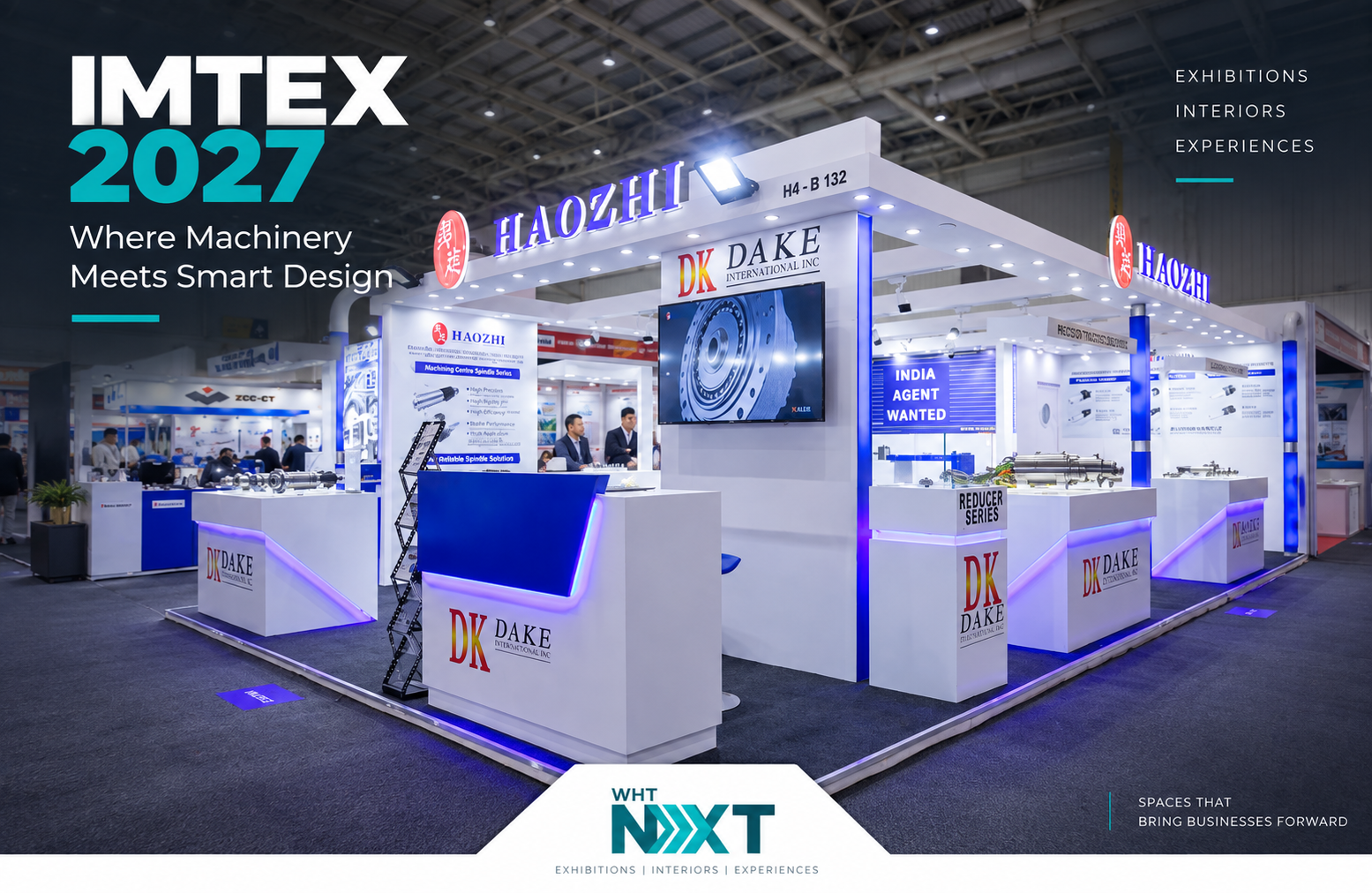
IMTEX 2027: Stall Structure Integrated with Industrial Machinery
IMTEX 2027 will showcase some of the latest developments in manufacturing technology, from CNC machines and machining centers to robotics, automation systems and other industrial equipment. Of course, it’s not just a matter of bringing the machinery to the exhibition and finding somewhere suitable to place it for exhibitors. Big machines need space to work, space for visitors to watch them and the right technical infrastructure to enable live demonstrations. At the same time, the exhibition stall should be organized, professional and inviting. Hence, the relationship between the machinery and the stall structure must be considered from the beginning of the design process.
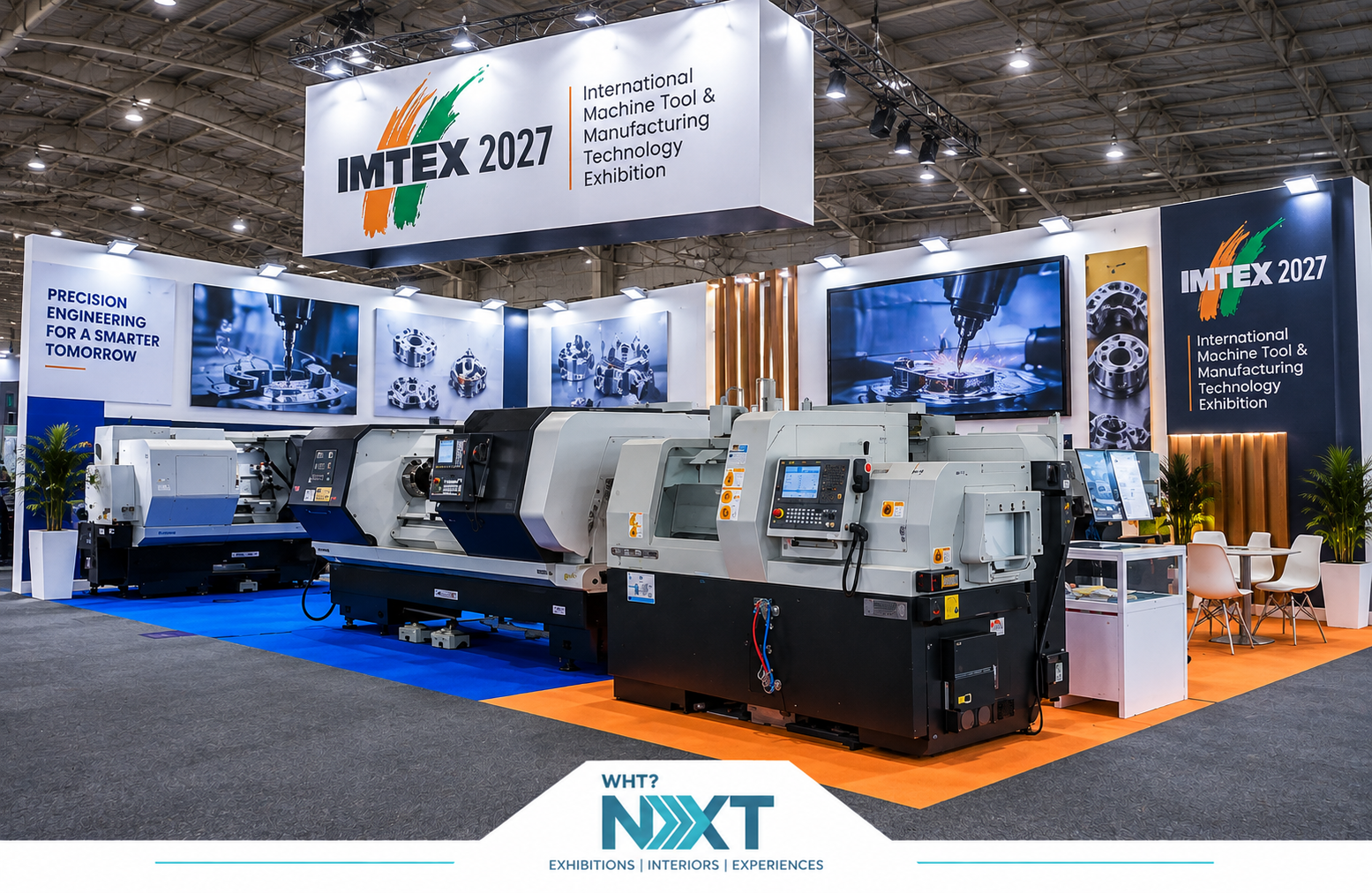
Unlike smaller products that can be simply placed on a counter or display stand, industrial machinery is usually the largest element in the stall. Its size and functionality will naturally attract attention, so the rest of the stall should be designed around it, not compete with it. A well designed stall layout can make a large machine look easier to understand and more inviting to visitors, while a poorly designed layout can make the same machine seem cramped or hard to reach. For companies preparing for IMTEX 2027, finding this balance can be crucial to how visitors experience the brand and the technology.
The Machine Ought To Affect the Stall Design
The initial phase in designing a stall for industrial machinery is to comprehend the equipment itself. It sounds obvious but when too much initial attention is paid to the visual design it is something which can easily be overlooked. A machine may have a certain footprint on paper, but the space around it can be much larger once operation, maintenance and visitor movement are taken into account.
Say, a CNC machine may need access to its control panel, loading area and moving parts. If the machine is shown during the exhibition, then the operator also needs enough space to work, without constantly having to move around visitors. The design team thus needs accurate information about the machine’s dimensions, weight, access points, operating area and technical requirements before finalizing the stall layout. When this information is available early, the structure can be built around the equipment instead of trying to make everything fit at the last minute.
Making big machinery less intimidating
Sometimes, big machinery can inadvertently act as a barrier between the exhibitor and the visitor. If the machine is located right at the entrance, or if it is surrounded by too many structural elements, visitors may see it from the aisle, but may be reluctant to enter the stall. Though, too much space between the stall and the equipment can make it seem disconnected.
Or even better, think about how people will naturally move through the space. The main machine should be immediately visible and the entrance readily apparent, and there should be sufficient space for stopping and watching a demonstration as visitors approach the stall. If several machines are on display, each should have a clear area, and they should not be so close together that visitors cannot move freely between them. This is particularly important at a busy event such as IMTEX, where there can be multiple conversations and demonstrations happening simultaneously.
Getting the Stall Structure to Work with the Machinery
The stall should not be overpowering to the machinery but should be in harmony with it. Industrial equipment already has a strong visual identity, particularly if it is large and highly engineered and operating during the exhibition. In fact the more decorative things you put around it the less effective the stall will be.
Instead, structural components may be used to frame the machinery and enhance its visibility. For example, overhead branding can help visitors identify the exhibitor from a distance, while a clean backdrop can provide space for the company name, product information or application graphics. Partial partitions can be used to separate different product categories but not to completely block the view of the machines. It also makes for a more organized stall. Visitors can naturally understand the layout, without having to look for single products or pass through unnecessary walls and displays.
Installation Planning Is Important
A design for an industrial machinery stall has to consider the events that occur even before the exhibition begins. Smaller exhibition products can be moved into a finished stall, in the same way that larger machines can not always be moved into a finished stall. Depending on the equipment special transport, lifting equipment and careful positioning may be required.
So the exhibition contractor has to know exactly when the machinery arrives and how it is brought into the stall. Some of the structural bits may need to be put in place after the machine is set up, others may need to be done first. You also need to consider the circulation route within the exhibition hall. If these are organized in advance, it will avoid situations where a machine arrives on site to find part of the stall structure blocking the access route. A good coordination between the machinery supplier, stall designer and fabrication team can make the entire installation process considerably smoother.
Build a Stall for the Demo
For a lot of machine builders, the biggest reason to exhibit at IMTEX is the chance to show their equipment in action and what it can really do. A machine sitting silently in a stall can attract the eye, but a live demonstration can give visitors a much better sense of its capabilities. The stall should therefore leave enough room for the demonstration. Visitors need to be able to see clearly what is going on , and the machine operator needs a safe and comfortable area in which to work . If the demonstration involves cutting, machining, automation or robotic movement the design should also provide for keeping visitors at an appropriate distance. Supporting screens can be helpful here particularly if technical information or additional applications need to be explained. The machine can be demonstrated in action and a nearby screen can explain specifications, applications or results. This gives visitors more information without plastering the stall with large amounts of printed content.
Safety Must Be Part of the Design
Safety is another area in which the displays of machinery at an exhibition need more thought than the displays of conventional products. A machine that is operating inside an exhibition hall may have moving parts, cutting tools, robotic arms or other equipment to which visitors should not have free access. These should be incorporated as part of the stall design rather than added as an afterthought. Visitors can be protected from the equipment without it being completely hidden behind transparent panels, controlled entry points and clearly marked demonstration areas. Good signage can also tell visitors where to stand during a demonstration.
Remember the Technical Requirements
Behind a working industrial machine, there is a lot going on that visitors may never see. Depending on the equipment being demonstrated electrical connections, cables, networking equipment, compressed air and other technical services may be required. These requirements ought to be discussed in the stall planning stage. If not considered during construction, cables could end up running across visible spaces, or technical equipment could be positioned wherever there is room. This can also make it more difficult to move around the equipment apart from affecting the appearance of the stall. Technical services can be included in planned service areas or hidden routes wherever possible, with sufficient access for maintenance. The intention is to keep the visitor area clean without compromising the practical needs of the machinery.
Lighting Can Change the Presentation of Machinery
Light is often seen as a decorative element but can be very useful in presenting industrial machinery. Big machines may have a lot of parts visitors might want to look at, and poor lighting may make it difficult to see some of those details. Lighting can be directed toward the main machine, control panels and demonstration areas instead of flooding the entire stall with extreme brightness. This naturally guides the visitor's attention to the most important parts of the equipment.
Branding Simplified
The machinery may be the star of the show, but visitors still need to know who is exhibiting and what the company has to offer. This isn’t to say you should plaster text and product information all over every wall. Often a clear company name, a simple message and a handful of well-placed application graphics can communicate more effectively. The branding should help visitors understand what they are looking at, not compete with the equipment.” Instead of filling the wall with technical specs, the exhibitor could use it to communicate the main application of the machine and then have the sales team provide detailed information in the conversation. This maintains a cleaner visual for the stall, and allows the visitor experience feel more natural. For companies planning their participation, completing the IMTEX 2027 booking process early can also give them more time to plan their machinery display, stall layout and overall exhibition experience.
Envision the Future After IMTEX
Planning should not end at exhibition opening. The stall also requires the removal of large machinery after the event and the dismantling can be as challenging as the installation. If the machine is surrounded by walls or overhead items that seem permanent and block access, removal can take substantially longer. The stall should therefore be designed taking the entire life cycle of the exhibition into consideration – from bringing the machinery into the hall, to operating it during the event, to finally taking it out. As one of the key manufacturing and engineering hubs in India, IMTEX 2027 Bangalore will provide exhibitors with a valuable platform to present new machinery, technologies and manufacturing solutions to industry professionals.
A good industrial stall does not need to be over-loaded with decoration to attract attention. With the machinery in the right place, backed by the right structure and delivered through a considered visitor experience, the machinery itself becomes the strongest part of the stall. This is the way a machinery display turns into a memorable experience for visitors at IMTEX 2027.
For exhibitors preparing for IMTEX 2027, collaborating with an experienced exhibition stall partner can ease the planning process substantially. WHTNXT is the specialist in developing exhibition environments for industrial and B2B brands. Where machinery, brand, visitor movement and technical requirements must be combined. The right team can help turn initial ideas into a practical exhibition setup, understanding the space required for large equipment and developing the surrounding structure and presentation. This is a great advantage for companies that need to demonstrate several machines, plan live demos or create a stand that communicates their technology clearly without taking up too much space.

एक टिप्पणी छोड़ें
आपका ईमेल पता प्रकाशित नहीं किया जाएगा। आवश्यक फ़ील्ड * से चिह्नित हैं