Why Packaging Gets People to Stop
Think about the last time you walked through a supermarket and noticed a product without actually looking for it. It could have been the colour, the shape of the package, the typography or simply the way the product stood out from everything around it. Packaging works in much the same way at an exhibition. Visitors are constantly surrounded by visual information, so brands need something that makes them pause and take a closer look.
Good packaging communicates a lot without saying too much. It can make a product feel premium, fresh, traditional, modern, healthy or innovative. Those impressions are often formed within seconds. At Gulfood, where buyers may be walking past hundreds of products during a single day, those seconds matter. A strong visual identity can be the difference between someone walking past a stand and someone deciding to step inside.
Turning Packaging Into a Stand
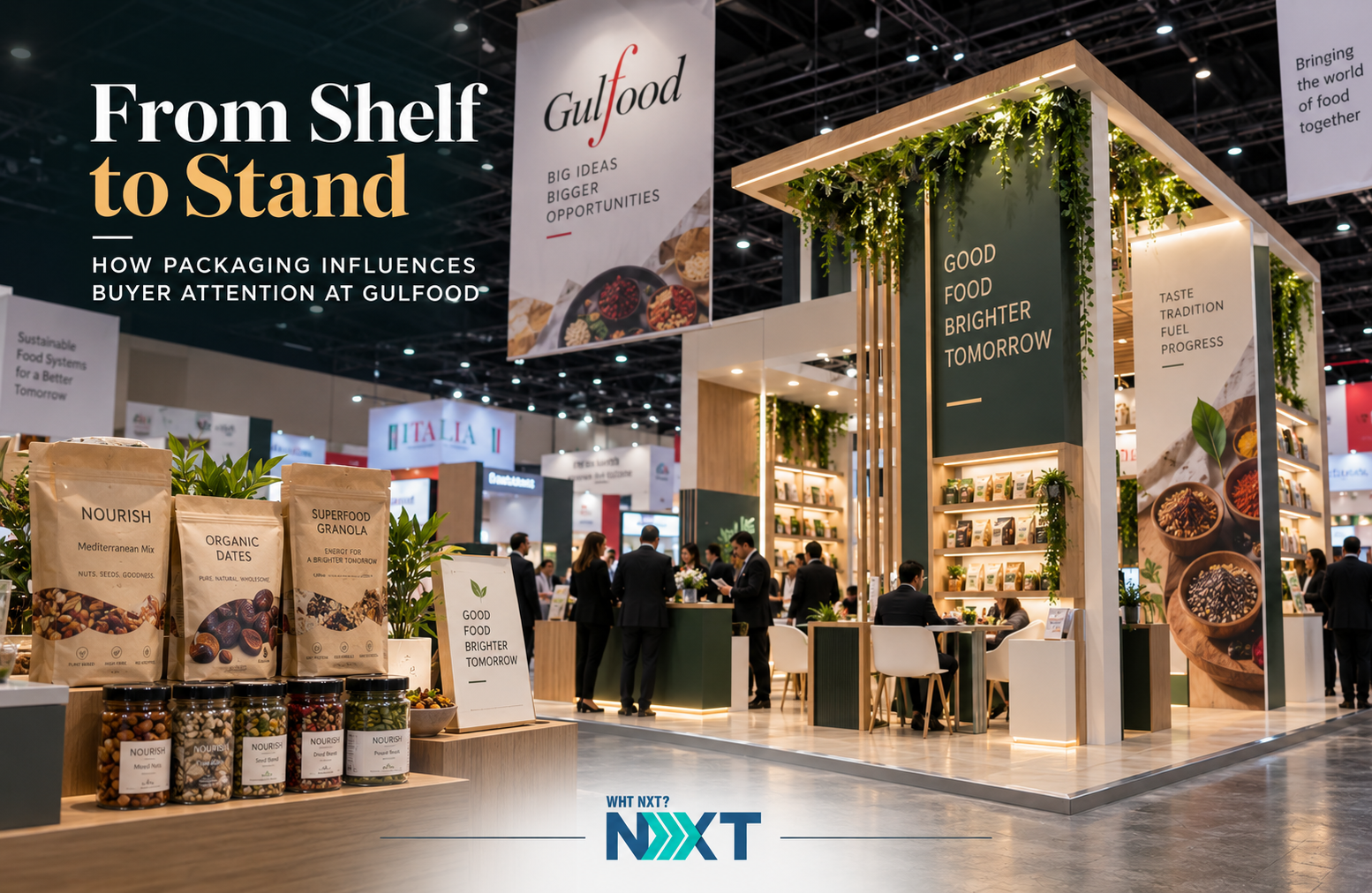
The best exhibition stands do not feel like they have been designed separately from the products. They feel like an extension of the brand. If a company's packaging already has a distinctive visual identity, that identity can become the foundation for the exhibition stand.
The colours, patterns, typography and imagery used on the packaging can be carried into the walls, display areas, counters and graphics. Products can be given dedicated spaces instead of being placed randomly across shelves. Larger versions of packaging elements can be used to create visual points that can be recognised from the aisle. When these elements come together, the stand starts to feel like a physical version of the brand.
This is particularly useful at a large exhibition like Gulfood. Visitors may see the stand from a distance before they can read the company name. A familiar colour combination or distinctive visual style can help them recognise the brand quickly and decide whether it is worth exploring.
Color Can Make a Big Difference
Color is one of the easiest ways packaging catches the eye, but there’s a lot more to using color effectively than simply choosing something bright. Colors have to make sense, to make sense for the product and the personality of the brand.
A premium food brand might use darker or more refined tones to create a sophisticated feel, whereas a natural or health-focused brand may use softer colors associated with freshness and nature. A vibrant snack or beverage brand may take a completely different approach.
At Gulfood, these colours can be carried across the exhibition space through graphics, lighting, product shelves and architectural details. When the same visual language appears across the product and the stand, the brand becomes easier to recognise. Instead of looking like a collection of unrelated elements, everything feels connected.
The Story Behind the Packaging
Packaging is rarely just about making a product look attractive. The strongest packaging usually tells a story. It might highlight the origin of the ingredients, the way the product is made, the company's heritage or the problem the product is designed to solve.
An exhibition stand gives brands the opportunity to expand that story.
A company selling traditional food products, for example, could use cultural elements and carefully selected materials to communicate its heritage. A brand built around sustainability could bring that idea into the stand through its materials, graphics and product presentation. A food technology company could use demonstrations and digital displays to show how its products are developed.
The important thing is that the stand should not simply copy the packaging and make everything larger. It should take the idea behind the packaging and turn it into an experience that visitors can understand.
Making It Easy for Buyers to Explore
At an exhibition like Gulfood, visitors do not want to work hard to understand what a brand is offering. A stand should make the experience feel natural. Someone walking past should be able to understand the brand quickly, while someone who decides to enter should have a clear path to discovering the products.
Packaging can help create this journey. You can put a strong hero product where it immediately catches attention and showcase the wider product range around it. Clear messaging can explain what makes the products different without filling every wall with text.
The idea is simple: attract attention first, create curiosity next and then give visitors enough information to start a conversation. The sales team can take that conversation further by discussing distribution, partnerships, product opportunities and other commercial details.
The Way a Product Is Displayed Matters
Even excellent packaging can lose its impact if the product is poorly displayed. How products are arranged, lit and presented can change how visitors perceive them.
A crowded shelf can make even a premium product feel ordinary. On the other hand, giving a product enough space, using appropriate lighting and placing it at the right height can immediately make it feel more important.
This is why product display should be considered part of the overall stand design. At Gulfood, brands have a limited amount of time to make an impression. Every shelf, display unit and lighting decision should help the product look its best while making it easy for visitors to explore the range.
Attention Is Only the Beginning
Getting a visitor to stop at the stand is important, but it is not the final goal. The real value comes from what happens after they stop.
A visitor might initially notice a package because of its colour or design, but they need a reason to stay. Product demonstrations, sampling areas, interactive displays and clear information can turn initial curiosity into genuine interest.
This is the point where packaging and exhibition design need to work together. The packaging is the first visual contact and the stand is the first opportunity for the visitor to discover more. When both are working together, the experience feels natural rather than forced.
For B2B brands, this can be especially valuable. Buyers attending Gulfood are not simply looking for products that look good. They are also considering factors such as product differentiation, market demand, brand positioning and potential business opportunities. The stand needs to communicate enough of that story to encourage a meaningful conversation.
Creating a Consistent Brand Experience
The impact of packaging should not end when the exhibition does. A brand's visual identity should ideally remain recognisable across its website, social media, brochures, retail displays and sales materials.
This consistency becomes particularly useful after Gulfood. A buyer who discovers a product at the exhibition may later search for the company online or come across its products through another channel. If the same visual identity appears everywhere, it becomes easier for the buyer to remember the brand.
In this way, an exhibition stand can become part of a much larger marketing strategy rather than being treated as a temporary structure that exists only for a few days.
Making the Product the Centre of Attention
An impressive exhibition stand does not necessarily need to be complicated. What matters is whether the design helps people understand and remember the brand.
Too many visual elements can sometimes distract from the products themselves. The goal should be to create a space where the packaging, products and brand story work together. The architecture, lighting, graphics and technology should support the product rather than compete with it. Working with experienced Gulfood stall fabricators can help brands translate their packaging and visual identity into a stand that feels consistent, professional and engaging.
This is where thoughtful exhibition stand design becomes important. The stand needs to look attractive from the outside, but it also needs to work from the inside. Visitors should be able to move comfortably, discover products easily and interact with the brand without feeling overwhelmed.
From Shelf to Stand with WHTNXT
For brands preparing for Gulfood, the challenge is not simply to build a large exhibition stand. The bigger challenge is creating a space that feels like the brand and gives visitors a reason to remember it.
WHTNXT helps brands turn their identity and products into engaging exhibition experiences. From the initial concept and creative direction to stand design, fabrication and execution, the focus is on creating spaces that attract attention while giving visitors a clear and memorable experience.
Experienced Gulfood booth fabricators also understand how to balance product displays, branding, visitor movement and functionality to create a space that attracts attention without overwhelming the visitor.
The journey from shelf to stand is ultimately about making the product feel bigger than the package itself. When packaging, storytelling and exhibition design come together, a brand does not simply occupy space at Gulfood. It creates an experience that people can see, explore and remember long after they have left the exhibition floor.

एक टिप्पणी छोड़ें
आपका ईमेल पता प्रकाशित नहीं किया जाएगा। आवश्यक फ़ील्ड * से चिह्नित हैं