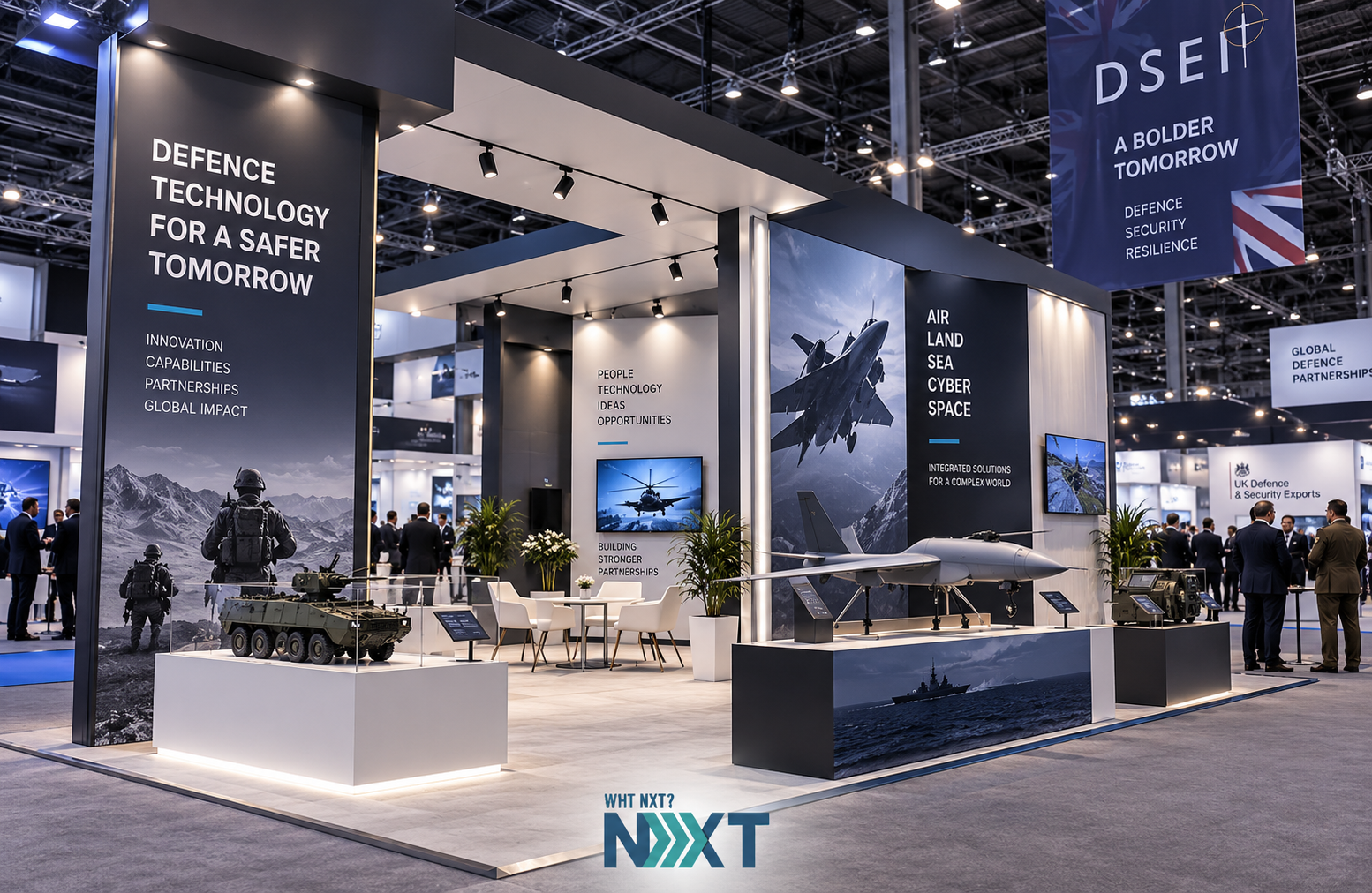
A good designed defense exhibition stall should not only be impressive from outside. It should help explain what the company does, showcase its capabilities and simplify visitors’ interaction with the brand. Layout, product displays, lighting, graphics, technology and meeting areas all have a role to play. When these elements work together, the stall becomes an experience rather than just a structure.
1. Start With How Visitors Will Move Through the Stall
One of the first things to consider when fabricating a defence exhibition stall is how people will actually use the space. It is easy to become focused on fitting every product, logo and message into the available area, but a crowded stall can quickly become difficult to navigate. Visitors should be able to understand where to enter, what to look at and where to speak with the team without having to figure it out themselves.
An open and welcoming entrance can make a big difference. The displays on the product visible from the aisle can encourage people to stop, and the interior can slowly direct them to demonstrations or meeting spaces. Other sections of the stall can be used for different purposes. A product display may attract passing visitors, a demonstration area can encourage them to stay longer and a quieter meeting area can provide the right setting for detailed business discussions. Good fabrication is not just about constructing walls and counters; it is about making the available space work properly.
2. Make Products Something Visitors Can Experience
Defence products and technologies can be highly technical, and sometimes a brochure simply cannot explain what makes a product useful or different. An exhibition gives companies the chance to show their products in a way that visitors can actually experience.
Instead of placing a product on a basic platform with a specification board beside it, the stall can be designed around the product. Large equipment can be displayed as a centrepiece, while smaller components can be presented through illuminated showcases or interactive displays. Cutaway models, working demonstrations and application-based displays can also help visitors understand how a technology is used in real situations.
The idea is not to add technology or visual elements just because they look impressive. Every display should have a reason behind it. If a visitor can understand the purpose and application of a product within a few moments of entering the stall, there is a much better chance of starting a useful conversation. DSEI stall fabricators help defence exhibitors create professional, functional spaces that effectively showcase their products and capabilities.
3. Give Visitors a Reason to Stop and Watch
A demonstration can often do more to attract attention than a wall full of information. When visitors see something happening inside a stall, curiosity naturally brings them closer. This is particularly useful for defence companies dealing with technologies that are difficult to explain through static graphics.
The demonstration area needs to be planned properly during the fabrication stage. There should be enough room for visitors to gather without blocking the main walkway. Screens should be positioned where people can actually see them, and power, lighting and equipment should be integrated neatly into the design.
Not every company can conduct a live demonstration at an exhibition, of course. In such cases, digital simulations, product animations, physical models or interactive displays can provide a similar experience. The important thing is to move away from simply telling visitors about a product and give them something they can see and understand.
4. Design Meeting Areas for Real Business Conversations
At a defence exhibition, some of the most valuable conversations may happen away from the main aisle. Senior reps, procurement teams and potential partners may want to meet about projects, requirements or future opportunities in a more comfortable and private environment.
That’s why meeting spaces need to be factored in early in the stall design. A small booth may need a few semi-private discussion tables, whereas a large exhibition space may have meeting rooms or executive areas. These spaces should feel like a natural part of the stall rather than something squeezed into whatever space remains after the displays have been planned.
There has to be a balance between privacy and openness as well. A fully enclosed meeting room can make the stall feel closed in, while a fully open table may not provide enough privacy for an important discussion. Partitions, glass elements, lighting, furniture and the overall layout can be used to create a space that feels professional without becoming unwelcoming.
5. Let the Stall Communicate the Brand Before Anyone Speaks
Visitors often decide within a few seconds whether they want to explore a stall. That means the stall needs to communicate something about the company before a salesperson even approaches them.
This does not mean covering every wall with text. In fact, too much information can have the opposite effect. Strong visuals, clear messaging and carefully selected graphics can communicate the company's capabilities much faster. The fabrication should then support those messages through the structure, materials, lighting and overall presentation.
For a defence company, the physical quality of the stall can also influence how visitors perceive the brand. Clean finishing, well-integrated lighting, properly installed graphics and a well-organised layout can create a professional environment that reflects attention to detail. When the stall looks carefully planned, visitors are more likely to spend time exploring it.
6. Replace Information Overload With Interactive Touchpoints
Brochures are useful, but most visitors do not want to stand at a stall and read pages of information. They usually want to find the information that is relevant to them quickly.
Interactive displays can make this easier. A touchscreen could allow visitors to explore different products, applications or technical specifications. A digital product catalogue could give them access to information without requiring the company to print large amounts of material. Videos, interactive diagrams and digital simulations can also help explain technologies that would otherwise require a lengthy conversation.
From a fabrication point of view, these screens should be properly integrated into the stall. A touchscreen placed randomly on a table can look like an afterthought. A digital wall, integrated kiosk or purpose-built display can make the technology feel like part of the overall experience. The result is a stall where visitors can explore information at their own pace while the exhibition team focuses on more meaningful conversations.
7. Design the Stall With the Next Step in Mind
Getting someone to stop at the stall is only the beginning. The real value is what occurs after that interaction. A good exhibition stall should make it easy for visitors to take the next step, whether that means requesting information, speaking to a technical representative, scheduling a meeting or discussing a potential partnership.
Digital instruments can help with this – they can be simple. Visitors can scan QR codes for product catalogs, technical documents or company profiles. Digital lead forms facilitate the collection of pertinent visitor information. Dedicated discussion areas can allow the sales team to move promising conversations away from the busy exhibition aisle.
Even the physical layout can support this process. Someone who notices a product from the aisle should have a clear path to explore it, speak to a representative and eventually move into a meeting. When the stall is planned around this journey, every part of the space has a purpose.
Moving Beyond the Traditional Defence Stall
The role of an exhibition stall has changed. Visitors are no longer impressed simply because a company has a large structure with its logo displayed across the top. They want to understand products, see technology in action and have conversations that are relevant to their requirements.
For defence exhibitors, this makes thoughtful stall fabrication particularly important. The best exhibition spaces bring together product displays, demonstrations, meeting areas, graphics, lighting and technology without making the experience feel complicated or overwhelming. More importantly, they are designed around the people who will actually use the space.
A successful defence stall does not necessarily need to be the largest one in the exhibition hall. It needs to give visitors a reason to stop and enough value to make them stay. When the design helps explain a product, encourages interaction and creates the right environment for business discussions, the stall becomes much more than a temporary structure.
Building Defence Exhibition Stalls That Start Conversations
At WHTNXT, exhibition stall fabrication is approached with this larger picture in mind. The objective is not simply to build a structure and place branding on it. From concept development and space planning to fabrication, lighting, product displays, meeting areas and visitor engagement, each element can be planned around the exhibitor's objectives.
Experienced DSEI booth fabricators can design and build engaging exhibition environments that attract visitors and support meaningful business conversations. For defence companies, where technology, credibility and business relationships are often at the centre of an exhibition, the right stall can play an important role in starting those conversations. A well-planned exhibition environment gives visitors something to see, something to understand and, most importantly, a reason to engage with the brand beyond the brochure.

एक टिप्पणी छोड़ें
आपका ईमेल पता प्रकाशित नहीं किया जाएगा। आवश्यक फ़ील्ड * से चिह्नित हैं